Ian wrapped up his ILM series which also featured John Knoll, Dennis Muren, Janet Lewin, David Vickery, Ben Morris, Rachel Rose, Rob Bredow, Ben Snow and Hayden Landis talking about ILM's history. Ian recently wrote the book Industrial Light & Magic: 50 Years of Innovation, which is terrific.
For the episode, Ian and I dug deep into ILM history and culture and even got into the weeds on certain shots, like one particular shot from "Transformers" (2007), where I talk about the collaborative spirit of how we make visual effects. We had a lot of fun, and I think you'll enjoy the discussion.
Since I spoke so much about that one "Transformers" shot, I thought I'd print the full credits for the shot here. Visual effects and filmmaking is a team sport, and each one of these people (not to mention the amazing camera, stunt and physical effects teams) brought their creativity and innovation to this lovely shot.
City Fight/End Battle Sequence Supervisors Nigel Sumner (lighting), David Hisanaga (FX), Todd Vaziri (compositing)
Visual effects and animation by Industrial Light & Magic, A Lucasfilm Ltd. Company, San Francisco, California
VFX Supervisor Scott Farrar, Animation Supervisor Scott Benza, Associate VFX Supervisor Russell Earl, Digital Production Supervisor Jeff White, Compositing Supervisor Patrick Tubach, Lighting Supervisor Hilmar Koch
Vanity Fair asked me if I wanted to talk about visual effects in a video, and it was my great honor to show off some of ILM’s terrific work over the years.
My goal was to highlight the artistic process of visual effects. Movies like the ones I highlight in the video are crafted by hundreds of artists, technicians and production folks, all working together to achieve the vision of the director. I’m so proud to have worked with such amazing crews over the years.
In the video, I wanted to emphasize the teamwork aspect of the work that we do. To support that, here are the full credit lists of everyone at ILM who worked on the projects I discuss in the video:
I want to thank everyone at Vanity Fair for making me feel so welcome and comfortable, especially director Adam Lance Garcia, editor Matthew Colby and everyone at ILM PR for this opportunity.
In the visual effects world, we frequently gripe about the prevalence of misinformation in the public discourse about “CGI” and the role of visual effects in Hollywood, but rarely do any of us tell our own stories about innovation, creativity, problem solving and teamwork to the general public. I’m very grateful for the opportunity to tell some of our stories about what we do.
I'm really proud of my final few words in the video:
Digital visual effects is just like any other step in the filmmaking process. There's really not a lot of fundamental difference between, say, what the costume designer does, what the editors do, what the set designers do. We're all trying to work together to solve problems and tell the story using light and images the best we can within the time that we have. It takes a lot of coordination to get all of this stuff done and sometimes hundreds and hundreds of digital artists working behind the scenes.
There's a perception out there that digital effects are a black box, that it just gets shipped off and the directors are just handed this work. [That] couldn't be further from the truth. We work directly with filmmakers to achieve their vision.
It was back in 2018 when I was a guest on a member special for Reconcilable Differences... and seven years later they asked me back! RecDiffs is one of my favorite podcasts, and it was again an honor to talk to my two friends John Siracusa and Merlin Mann about movies, parenting, podcasting, Letterboxd and a whole bunch of other stuff.
To hear this episode, you need to become a Relay member. Please consider joining the Relay community by signing up for a Relay membership.
Here's a clip from the episode where I ask John to stop referring to the movie tracking app as "Letterbox D":
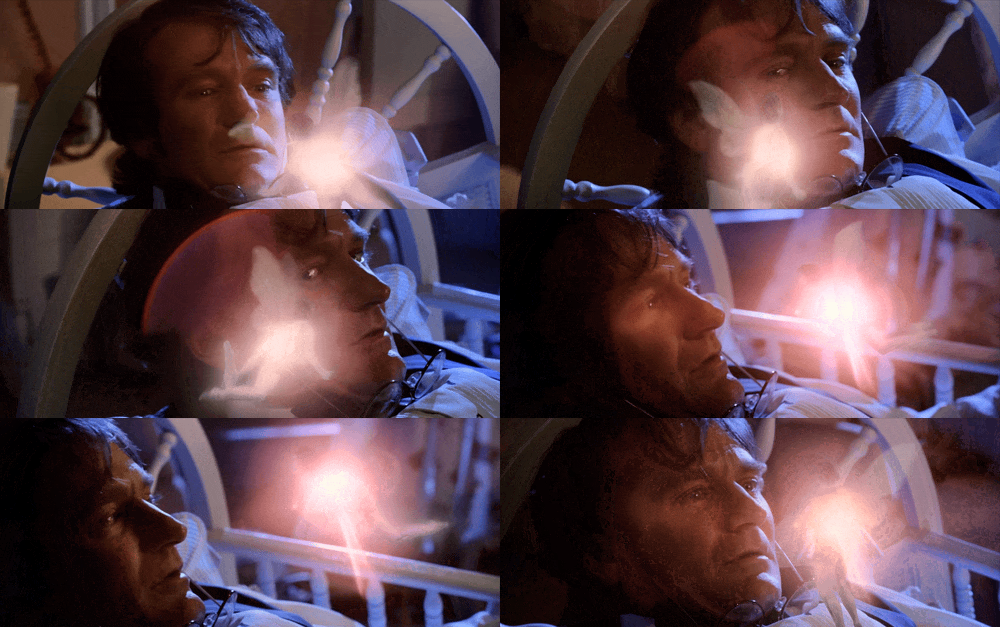
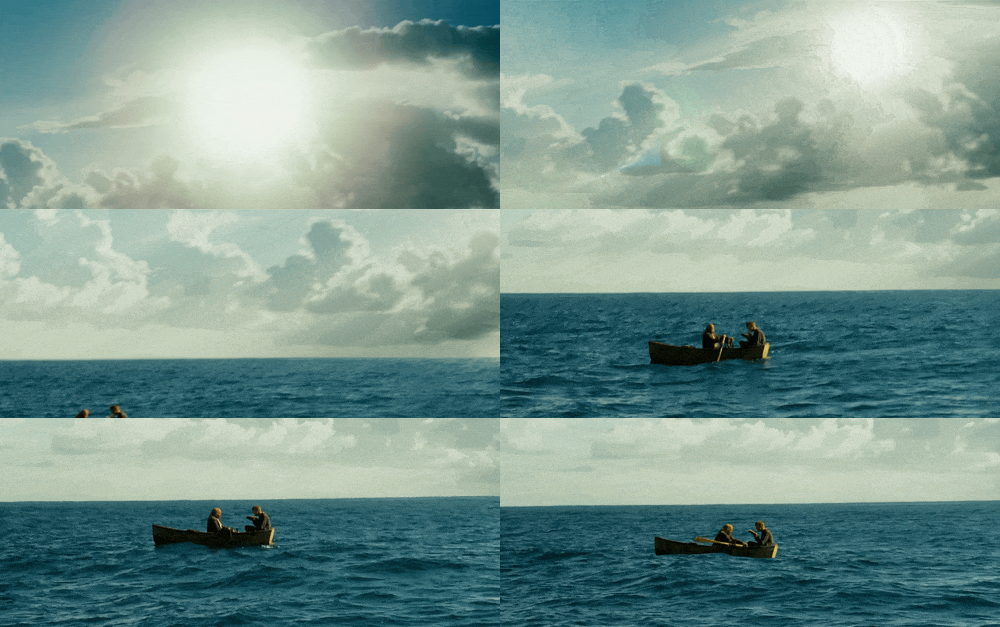
Lighter Darker, The ILM Podcast’s first season comes to a close with Episode 20, our Lens Flare Extravaganza! Rob, Jenny and I are joined by John Knoll and Shannon Tindle to talk all about lens flares, those fun aberrations that occur within a lens when light rays shine at JUST the right angle. John talks all about the creation of Knoll Light Factory, the innovative and industry-changing software that allowed digital artists to create their own lens flares in Adobe Photoshop. Shannon talks about his flares in “Kubo” and “Lost Ollie” and we all talk about our favorite lens flares from movies we’re fans of, and flares that we’ve created.
The official show notes are ILM.com, but I wanted to add more visually-oriented show notes, and include clips from the shots that we discuss on the show.
Shannon makes mention of “Visions of Light”, the documentary directed by Arnold Glassman, Todd McCarthy and Stuart Samuels about cinematography that was deeply influential to me and how I look at movies. At some point, internet hero “Deus Ex Film Prof “ re-edited the entire documentary and swapped out old standard definition clips with much clearer and brighter high definition clips, which makes for a much more pleasant viewing experience.
“Cool Hand Luke” (1967)
“The Good, The Bad and the Ugly” (1966)
“Rango” (2011)
I didn't mention it on the show, but this flare from "Raiders of the Lost Ark" was also an inspiration for the "Rango" lens flare that I designed.
“Blade Runner” (1982)
“Close Encounters of the Third Kind” (1977)
“Star Trek” (2009)
Relevant article: Millimeter Magazine: Back on Trek, where director JJ Abrams, cinematographer Dan Mindel and VFX supervisor Roger Guyett talk about the lens flares of the movie, and even mention my lens flare work on the film. ILM Sequence Supervisor Todd Vaziri was responsible for developing the artificial lens-flare software system, which the company dubbed SunSpot. The system essentially combines off-the-shelf software, certain proprietary ILM tools, photographed elements, and several custom paint elements to painstakingly match the flares captured on the negative.
Relevant article: Post Magazine: “Star Trek” Returns, where Guyett and others discuss the visual effects lens flare work on the film. ILM's Todd Vaziri analyzed what anamorphic lenses do and all their different properties so they could be used in simulated shots and they call the resulting program "Sunspot." Vaziri was a sequence supervisor whose job was to overlook all the sequences and make sure that ILM's shots were "correct to the film" — that they matched. "He takes great, great pains and it shows," says [compositing supervisor Eddie] Pasquarello. "That was one of our compositing coups that I feel made a difference here — finishing touches that help our shots blend with the live action that J.J. gave us."
The first shot of the movie, composited by Greg Salter, lens flare design by Todd Vaziri
The last shot of the movie, composited by Todd Vaziri
The Vulcan Sun, shot composited by Francois Lambert, lens flares by Todd Vaziri
"2001: A Space Odyssey" (1968)
"Pirates of the Caribbean: Dead Man's Chest" (2006)
Two shots from "Pirates 2" that featured John Knoll's photographed flares.
“Kubo and the Two Strings” (2016)
Shannon's original storyboard frame for this shot.
"Lost Ollie" (2022)
"Raiders of the Lost Ark" (1981)
“Die Hard” (1988)
“Star Wars” (1977)
This is the shot that John and I roasted, indicating not only the two disparate light directions in the shot, but the fact that the foreground element (the Falcon) has been comped on top of lens flare elements which are being created inside the lens.