
Showing posts sorted by relevance for query life of pi. Sort by date Show all posts

Tuesday, January 22, 2013

The VFX Predictinator, 85th Academy Awards Edition


It’s time to fire up The VFX Predictinator!

Let’s summarize the history of The Predictinator in a few delightful bullet points:

  • We created The VFX Predictinator in early 2010, before the 82nd Academy Awards. It’s a formula that accurately predicts the winner of the visual effects Oscar based on 20 years of data (1989-2008), using quantifiable criteria. [Part 1 of the series.]
  • In 2010, we used the same formula to accurately predict “Avatar” as the winner of the visual effects Oscar.  In 2011, the formula accurately predicted “Inception” to take home the gold. And in 2012, the same formula correctly predicted “Hugo” to win the Oscar.
  • The VFX Predictinator is about predicting the Oscar winner using statistical methods of quantifiable data, summarizing Academy voters’ tastes with a formula; this is not a discussion about the artistic and technical achievements of each of the films, nor about who ‘deserves’ to win.

Since creating the formula, we’re three for three. In essence, we have a formula that has correctly predicted the visual effects Oscar winner for 23 years in a row.

Let’s see what The VFX Predictinator says about the nominees this year, the 85th Academy Awards nominees for Best Visual Effects:


Is The Predictinator’s choice of “Life of Pi” surprising to you?  When it comes to popularity, “The Avengers” and “The Hobbit: An Unexpected Journey”, both gigantic blockbusters, are far more exposed than “Life of Pi”, a relatively small art house film directed by the celebrated filmmaker, Ang Lee. Before the nominations even were announced, I wasn’t shy with my early prediction that “Hobbit” would take home the gold.  The staggering volume of quality work in both “Hobbit” and “Avengers”, along with the fact they’re both part of beloved franchises, I thought, might be enough to take either film to Oscar victory.

By the time the nominations were announced, however, the filmmaking community became much more aware of the astounding visual effects work in “Life of Pi”, and the film’s momentum really picked up.

“Life of Pi”’s Predictinator margin of victory over “Avengers” and "Hobbit", the films that earned the second and third highest scores, is similar to “King Kong”’s edge over “Lion Witch and the Wardrobe” from 2005, and also similar to last year’s “Hugo” victory over “Rise of the Planet of the Apes”.  It’s not a decisive, overwhelming marginal victory (like 2001’s “Fellowship of the Ring” or 1997’s “Titanic”), but a solid victory nonetheless.

The whole point of The VFX Predictinator is to get into the head of the typical Academy voter, so let’s dive into the formula’s mechanics and see how each film scored its points, and how each films’ chances were strengthened or penalized by each piece of criteria as defined by The Predictinator.

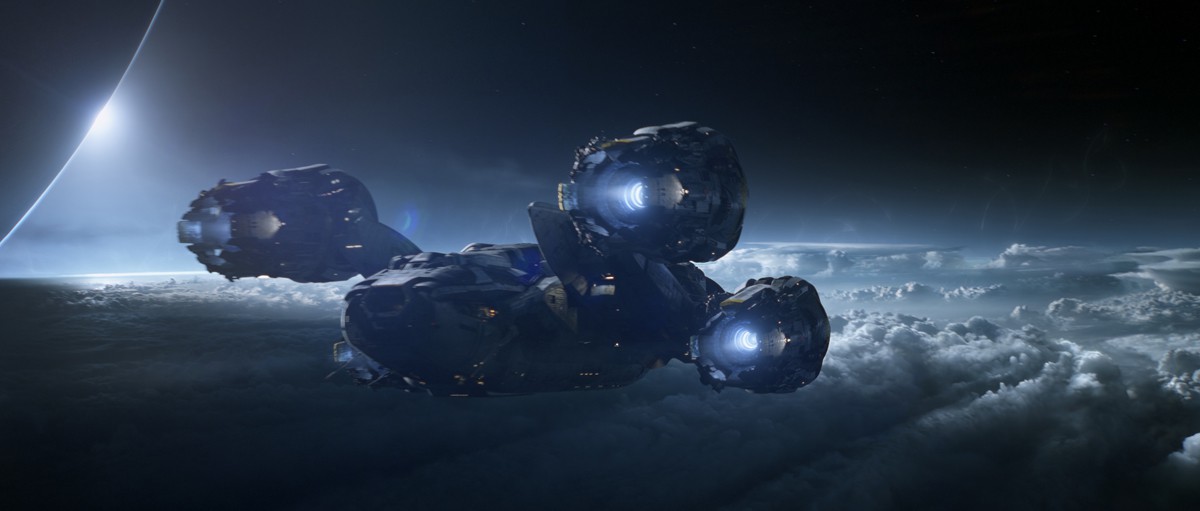

Let’s start with the two films with the lowest scores, “Prometheus” (3.3 points) and “Snow White and the Huntsman” (3.78).  These films had relatively modest box office tallies and were both released in June, and aren’t really on the Academy’s radar, only earning 1 and 2 Academy Award nominations, respectively.  The primary effects for “Prometheus” did not consist of organic character animation, which hurts its chances, since Academy voters generally lean toward voting for films with prominent CG characters. “Snow White” certainly had its fair bit of character work, but doesn’t qualify for ‘main character CG facial acting’, since none of the CG characters had a significant ‘performance’ role in the film.  We also gave this type of scoring to “Harry Potter 3” back in 2004, which also had a great deal of organic character animation, but no ‘main’ characters with facial acting performances.  “Snow White” was the only film to have an Academy Award winning actor in a lead role (Charlize Theron), which earned it a point.


“Hobbit” and “Avengers” both had strengths and weakness, almost at opposites to one another.  “Hobbit” had a modest Tomatometer rating (65%), while “Avengers” had the highest of the nominees (92%), and also doubled “Hobbit”’s box office take.  “Avengers” was a box office behemoth, earning over $1.5 billion around the world, which earned it the most Box Office points (.82, versus “Hobbit”’s .35).

 “Avengers” was a May release, which hurts its chances of winning the Oscar, as opposed to “Hobbit”’s December release date.  And although Hulk is an important character in “Avengers”, the primary effects for the film revolve around the superheroes’ amazing abilities, fantastic environments (New York City, Helicarrier) and destruction effects, while “Hobbit”’s giant cast of animated characters qualify it for both animation categories.   The two films earned almost the same Predictinator scores, as a result.

What gives “Life of Pi” its decisive edge?  It had a very strong Tomatometer rating (89, right behind “Avengers”’ 92), and its release date was late in the year unlike most of its competition, which also helped its chances of winning the Oscar.

But the single most decisive criteria for “Life of Pi” is its Oscar acclaim.  The film earned a total of 11 Academy Award nominations, far greater than any of its visual effects competition, and is generally regarded as one of the most critically acclaimed films of the year, along with “Lincoln”, “Django Unchained”, “Zero Dark Thirty” and “Argo”.  “Hobbit” earned only three nominations, “Snow White” earned two, and “Prometheus” and “Avengers” only earned its visual effects nomination.  With “Life of Pi”’s eleven nominations (second only to “Lincoln” with 12), it garnered a whopping 2.75 Predictinator points, while none of the other films earned the minimum threshold of nominations to receive any points in this criteria (four nominations are the minimum required to begin earning points in this criteria).

How important is Oscar acclaim? Over the last 23 years, the film that earned the most Oscar nominations among the nominees won the visual effects award 19 times.  “Life of Pi” is absolutely on the radar of Academy voters.


An interesting observation about this year’s crop of nominees: we aren’t considering any of the five nominees sequels. “Hobbit” and “Prometheus” are prequels and “Avengers” has a gathering of existing characters from other film series, and was not a continuation of a specific film series.  This is only the third time in 11 years where none of the nominees are considered sequels.  (If a nominee is a sequel, the Predictinator formula takes away points, since the Academy historically doesn’t like awarding sequels.)

For a moment, forget about the statistical analysis and let’s think about the typical Academy voter.  As The Los Angeles Times has shown in their “Who’s Who in the Academy” series, we know that the vast majority of Academy voters are white males over 60 years old.  Historically, Academy voters prefer to reward safe, acclaimed films.

The typical Academy voter will feel good about voting for “Life of Pi”, a film created by a celebrated director, a film that is well-loved by the establishment, and also earned 11 total nominations. Voters will be much more hesitant to vote for “Avengers”.  Although voters may have liked the film and appreciated the amazing character work of Hulk, “Avengers” is still another superhero movie that earned a billion and a half dollars at the box office.  The story is similar with “Hobbit”; a voter will ask himself, ‘wait, didn’t we already give three visual effects Oscars to ‘Lord of the Rings’ movies?  And they’re making three more? Voters are less likely to want to reward these films.


The visual effects of “Life of Pi” are also unique in another way; the world of the film is bathed in stylistic beauty unseen in recent films. The movie is dripping with aesthetic eye candy, particularly with its environment work.  The dreamlike, surreal atmosphere of the world of “Life of Pi” is experimental and unlike typical visual effects films, and not dissimilar from another Oscar winner, “What Dreams May Come” from 1998.  Both films took their abstract imagery to new heights, and Academy voters are keen to reward these kinds of films.  As a reminder, “What Dreams May Come” took home the visual effects Oscar over another colossal blockbuster, “Armageddon”.


Also worth mentioning is the elephant in the room, which in this case is actually a fully photorealistic tiger.  The computer generated Richard Parker in “Life of Pi” is regarded by nearly everyone who has seen the film as an extraordinary work of art.  The realization of the tiger is a tremendous triumph of artistic visual effects creation, not dissimilar to the giant achievements in CG characters from “Terminator 2”, “Jurassic Park”, Gollum from “The Two Towers”, and Davy Jones from “Pirates 2”, all of which are Oscar winners for visual effects.  The ultra-photorealistically animated and rendered tiger (and zebra, orangutan and hyena) in the lifeboat literally sitting in stylized, abstract environments invites discussions about the very nature of visual storytelling, combining realistic elements with fanciful worlds, and gets to the heart of the metaphors and narratives of the richly textured film.  It’s a different type of visual effects film, and voters will want to reward it.

After creating The VFX Predictinator, some say that its predictions of “Avatar” and “Inception” victories were fairly, ahem, predictable.  Its correct prediction of “Hugo”, however, showed that the formula can be thrown a serious curve ball and still hit a home run.  I consider this another ‘curve ball’ year; both “Hobbit” and “Avengers” are well-exposed blockbusters, and “Life of Pi”, even with its tremendous visual effects, does not have an inevitable victory.  We’ll see what happens when the Oscar winners are announced on February 24.


Wednesday, January 09, 2013

VES Announces Nominations for 11th VES Awards


The Visual Effects Society has announced the nominees for the 11th Annual VES Awards.

"The Hobbit: An Unexpected Journey" leads all live-action feature film nominees with seven nominations.  "Life of Pi" and "The Avengers" earned six nominations, while "Prometheus" earned three, and "Battleship" and "The Impossible" earned two each.

Also earning nominations in live-action feature film categories was "The Amazing Spider-Man", "The Dark Knight Rises", "Flight", "Total Recall", "Argo", "Zero Dark Thirty", "Rust and Bone", "Men in Black 3".

The awards will take place on February 5, 2013 at the Beverly Hilton Hotel.

The following are nominations for live-action feature film categories.  To see all the nominations, visit FXGuide's coverage.  For more information on Visual Effects Society, visit their website.


Outstanding Visual Effects in a Visual Effects-Driven Feature Motion Picture

The Hobbit: An Unexpected Journey
Joe Letteri, Eileen Moran, Eric Saindon, Kevin L. Sherwood

Prometheus
Paul Butterworth, Charley Henley, Allen Maris, Richard Stammers

Life of Pi
Thomas Fisher, Susan Macleod, Guillaume Rocheron, Bill Westenhofer

The Avengers
Susan Pickett, Janek Sirrs, Jeff White, Guy Williams

Battleship
Grady Cofer, Pablo Helman, Jeanie King, Glen Mcintosh


Outstanding Supporting Visual Effects in a Feature Motion Picture

Rust and Bone
Béatrice Bauwens, Cédric Fayolle, Nicolas Rey, Stéphane Thibert

The Impossible
Felix Bergés, Sandra Hermida,  Pau Costa Moeller

Argo
Matt Dessero, Leslie Hough, Gregory McMurry, Tom Smith

Flight
Kevin Baillie, Michael Lantieri, Chris Stoski, Ryan Tudhope

Zero Dark Thirty
Geoff Anderson, Chris Harvey, Jeremy Hattingh


Outstanding Animated Character in a Live Action Feature Motion Picture

The Hobbit: Goblin King
Jung Min Chan, James Jacobs, David Clayton, Guillaume Francois 
      
The Hobbit: Gollum
Gino Acevedo, Alessandro Bonora, Jeff Capogreco, Kevin Estey

The Avengers: The Hulk
Marc Chu, John Doublestein, Cyrus Jam, Jason Smith

Life of Pi: Richard Parker
Erik De Boer, Sean Comer, Betsy Asher Hall, Kai-Hua Lan


Outstanding Created Environment in a Live Action Feature Motion Picture

The Hobbit: Goblin Caverns
Ryan Arcus, Simon Jung, Alastair Maher, Anthony M. Patti

Prometheus: LV-233
Julien Bolbach, Marco Genovesi, Martin Riedel, Marco Rolandi

The Avengers: Midtown Manhattan
Richard Bluff, Giles Hancock, David Meny, Andy Proctor

Life of Pi: Open Ocean
Jason Bayever, Sho Hasegawa, Jimmy Jewell, Walt Jones


Outstanding Virtual Cinematography in a Live Action Feature Motion Picture

The Hobbit: An Unexpected Journey
Matt Aitken, Victor Huang, Christian Rivers, R. Christopher White

The Avengers : Downtown Manhattan
Colin Benoit, Jeremy Goldman, Tory Mercer, Anthony Rispoli

Total Recall: Hover Car Chase
Daniel Baldwin, Mattias Forsstrom, Sam Schwier, Joshua Wassung

The Amazing Spider-Man
Rob Engle, David Schaub, Cosku Turhan, Max Tyrie


Outstanding Models in a Feature Motion Picture

The Avengers: Helicarrier
Rene Garcia, Bruce Holcomb, Polly Ing, Aaron Wilson

The Impossible: Orchid Hotel
Markus Donhauser, Patrick Lehn, Angel Martinez, Juergen Pirman

Men in Black 3: Cape Canaveral/ Apollo Launch
Craig Feifarek, Hee-Chel Nam, Erik Neill, Taehyun Park

The Dark Knight Rises: Airplane Heist
Scott Beverly, Alan Faucher, Ian Hunter, Steve Newburn


Outstanding FX and Simulation Animation in a Live Action Feature Motion Picture

The Hobbit: An Unexpected Journey
Areito Echevarria, Chet Leavai, Garry Runke, Francois Sugny

Life of Pi: Storm of God
Harry Mukhopadhyay, David Stopford, Mark Williams, Derek Wolfe

Battleship
Florent Andorra, Willi Geiger, Rick Hankins, Florian Witzel

Life of Pi: Ocean
Jason Bayever, David Horsley, Scott Townsend, Miles Vignol


Outstanding Compositing in a Feature Motion Picture

The Hobbit: An Unexpected Journey
Jean-Luc Azzis, Steven Mcgillen, Christoph Salzmann, Charles Tait

Life of Pi : Storm of God
Ryan Clarke, Jose Fernandez, Sean Oharas, Hamish Schumacher

The Avengers: Hulk Punch
Chris Balog, Peter Demarest, Nelson Sepulveda, Alan Travis

Prometheus: Engineers & the Orrery
Xavier Bourque, Sam Cole, Simone Riginelli, Denis Scolan

Tuesday, February 12, 2013

"Life of Pi" Wins at VES Awards


The 11th Annual VES Awards took place on February 5 at the Beverly Hilton Hotel, and "Life of Pi" won four awards (out of its six nominations), including Outstanding Visual Effects in a Visual Effects-Driven Feature Motion Picture.

"The Avengers" took home two awards, while "The Hobbit: An Unexpected Journey" won one award; "The Impossible" won the award for Outstanding Supporting Visual Effects.

The following are winners for live-action feature film categories.  To see all the nominees from feature film categories, click here; and to see all the winners visit FXGuide's coverage.  For more information on Visual Effects Society, visit their website.


Outstanding Visual Effects in a Visual Effects-Driven Feature Motion Picture
Life of Pi
Thomas Fisher, Susan Macleod, Guillaume Rocheron, Bill Westenhofer


Outstanding Supporting Visual Effects in a Feature Motion Picture
The Impossible
Felix Bergés, Sandra Hermida, Pau Costa Moeller


Outstanding Animated Character in a Live Action Feature Motion Picture
Life of Pi: Richard Parker
Erik De Boer, Sean Comer, Betsy Asher Hall, Kai-Hua Lan


Outstanding Created Environment in a Live Action Feature Motion Picture
The Avengers: Midtown Manhattan
Richard Bluff, Giles Hancock, David Meny, Andy Proctor


Outstanding Virtual Cinematography in a Live Action Feature Motion Picture
The Hobbit: An Unexpected Journey
Matt Aitken, Victor Huang, Christian Rivers, R. Christopher White


Outstanding Models in a Feature Motion Picture
The Avengers: Helicarrier
Rene Garcia, Bruce Holcomb, Polly Ing, Aaron Wilson


Outstanding FX and Simulation Animation in a Live Action Feature Motion Picture
Life of Pi: Storm of God
Harry Mukhopadhyay, David Stopford, Mark Williams, Derek Wolfe


Outstanding Compositing in a Feature Motion Picture
Life of Pi : Storm of God
Ryan Clarke, Jose Fernandez, Sean Oharas, Hamish Schumacher

Tuesday, January 28, 2014

The VFX Predictinator, 86th Academy Awards Edition


UPDATE: Yep.

Now that the Academy Award nominations have been announced, it’s time to fire up The VFX Predictinator.  This year’s predicted winner may not surprise you. But first, here's some background for those of you just joining us.

The VFX Predictinator is a formula my wife and I created to predict the winner of the visual effects Oscar. We designed the formula before the 82nd Academy Awards based on 20 years of data (1989-2008); it assigns point values to certain criteria of each nominee. Part 1 of the series.

Using the same formula, we have correctly predicted the last four years of Oscar winners (“Avatar”, “Inception”, “Hugo” and “Life of Pi”). For 24 years, this single formula has correctly predicted the winner of the visual effects Oscar.

Allow me to reiterate that this discussion is not about artistic or technical achievements. This isn’t about who ‘deserves’ to win due to aesthetic achievement, technical prowess, or cultural significance; the whole point of this exercise is to prove that Academy voters are simply predictable when it comes to determining how they will vote. As a reminder, the visual effects branch of the Academy determines the nominees in a bake-off, while the full Academy membership of nearly 6,000 members votes on the winners.

Academy voters ride waves of popularity, acclaim, perceived challenges and their own short memory spans when voting for winners of Academy Awards. Many admit they haven't seen even a majority of nominated films. We designed The Predictinator to account for these things: for example, popularity (box office), acclaim (Rotten Tomatoes score), memory span (month of release), plus other criteria which can affect voters' emotional choices.

Is the nominee a sequel? Blech. Has its lead actor won an Oscar before? Oh, well, it’s got my vote! Is the movie filled with robots that destroy things? Meh, no thank you. I just saw this movie two months ago! I remember it!

Let’s see what the formula says about the 86th Academy Awards:


“Gravity” is the predicted winner, with 9.67 points. Its margin of victory is quite similar to last year’s winner, “Life of Pi” over its next closest competitor.

Alfonso Cuaron’s film excelled in nearly every piece of criteria; it was a critical darling (it had the highest RT score of all the nominees at a whopping 97%), earned a lot of money (the third top grosser), and was released late in the year. The film was one of two non-sequels nominated, which helped as well. Nominees that are sequels have their scores reduced by 0.5 points.

But most importantly, “Gravity” earned 10 total Oscar nominations, blowing all of the other films away. Previous winners “Life of Pi”, “Hugo” and "Return of the King" earned 11 total Oscar nominations. And over the last 24 years, the film that earned the most Oscar nominations among the visual effects nominees won the visual effects award 20 times.

Putting the final nail in the coffin, “Gravity” stars Sandra Bullock, who is an Oscar winner herself, giving the film another point.


Last year, “Hobbit 1” had the third highest Predictinator score; this year “Hobbit 2” earned enough to be in second place. Strengths for “Hobbit 2” included its month of release (December) and its respectable Tomatometer and box office scores.  It was the only film that qualified for the extremely important “Primary FX are organic creatures” criteria, plus the subsequent “facial acting” criteria, for its creation of Smaug, the talking dragon. However, these positives weren't enough to overtake the juggernaut that is “Gravity”.

The relative lack of organic creatures in 2013 mimics 2011 and 2010; like those years, only one film had organic creatures as their primary visual effects. In both of those years, the creature film was not the predicted (nor actual) winner. If our 2013 prediction is true, it will continue this bizarre pattern.

At third and fourth place was “Star Trek Into Darkness” and “Iron Man 3”, two sequels that were well-reviewed and earned lots of money at the box office, but were penalized for being sequels, and without primary creature work. Plus, they were released earlier in the year, and didn’t earn enough additional Oscar nominations to earn any points.

“The Lone Ranger” earned a dismal score of 1.17 points; it was destroyed by its low Tomatometer rating and its relatively minuscule box office. But its low score was not record-breaking. At 1.04 points, “Transformers 3” has the lowest score of The Predictinator’s history. “Ranger” has the second lowest, with “Alien 3” as the third lowest.

Stepping away from the statistics for a moment; there’s no denying that “Gravity” has captured the imagination of the public and of Academy voters.  The innovative techniques used in the creation of the effects, along with its flawless execution and gorgeous aesthetics (combined with the fact that it is a nearly universally-loved film) give this prediction emotional support. The Predictinator numbers quantify the wave of popularity and acclaim for the film.


You might respond to this prediction with Um, well, duh, of course ‘Gravity’ will win the Oscar. I don’t need a formula to tell me that.

I would be the first to admit that it would be truly surprising if "Gravity" didn't take home the Oscar.  Lucky for us, The Predictinator seems just as accurate predicting the obvious winners as the nail-biters.  How many people were predicting “Hugo” to win over “Rise of the Planet of the Apes” and the final “Harry Potter” film?  Or "The Golden Compass" winning over "Transformers"? Or "Babe" over "Apollo 13"? The Predictinator nailed these winners, plus also correctly predicted the lopsided victories of “Avatar” and “Inception”.

We'll see what happens when the Academy Award winners are announced on March 2.  UPDATE: Yep.


Tuesday, January 20, 2015

What is The VFX Predictinator?

updated Jan 3, 2019

The VFX Predictinator is a formula my wife and I developed to correctly predict the winner of the visual effects Academy Award. Cinefex covered The Predictinator in this nice article in 2014.

We developed the formula in 2010, using historical data from 1989-2008 Academy Award nominees and winners for Best Visual Effects. The formula uses quantifiable data to predict a winner. Since then, The VFX Predictinator has correctly predicted the winners of the subsequent VFX Academy Award Winners (“Avatar”, “Inception”, “Hugo”, “Life of Pi” and "Gravity”). In 2014, The Predictinator incorrectly predicted "Guardians of the Galaxy" to win, the first year it was wrong. But we updated the formula, which fixed that bad prediction. We got it completely wrong when we predicted "The Revenant"; "Ex Machina" won the award. We bounced back, correctly predicting "The Jungle Book". In our final effort, we incorrectly predicted "War for the Planet of the Apes", which was bested by "Blade Runner 2049".

The Predictinator does not make artistic or technical judgments. The discussion isn’t about who ‘deserves’ to win due to aesthetic achievement, technical prowess, or cultural significance; the whole point of the exercise is to prove that Academy voters are remarkably predictable when it comes to determining how they will vote for the visual effects Oscar since 1989. As a reminder, while the visual effects branch of the Academy determines the nominees in a bake-off, the full Academy membership of nearly 6,000 members votes on the winners.

Academy voters ride waves of popularity, acclaim, perceived challenges and their own short memory spans when voting for winners of Academy Awards. Many admit they haven't seen even a majority of nominated films. We designed The Predictinator to account for these things: for example, popularity (box office), acclaim (Rotten Tomatoes score), memory span (month of release), plus other criteria which can affect voters' emotional choices.

With the formula, we break down the way most Academy voters think.  “Is the nominee a sequel? Blech. Has its lead actor won an Oscar before? Oh, well, it’s got my vote! Is the movie filled with robots that destroy things? Meh, no thank you. I just saw this movie two months ago! I remember it!”

The formula used the following criteria:
  • Critical Acclaim - as measured by Rotten Tomatoes Tomatometer percentage), the higher the better
  • Domestic Box Office - measured at the time of Academy voting, the higher the better
  • Academy Award Nominations - to gauge Academy acclaim, the higher the better
  • Month of Release - the later the film’s release, the greater chance of winning
  • Sequel Score - sequels are penalized
  • Previous Sequel Was Oscar Winner - previous films that won 
  • Primary VFX Are Organic Creatures - organic creature films win more frequently
  • Facial Animation Acting - creatures that talk win frequently
  • Film Based on Comic Book - If the film is based on a comic book
  • Lead Actor Prestige - If the lead actor has won an Oscar, film usually wins VFX Oscar
The 90th Academy Awards prediction represented the last time we ran The VFX Predictinator. There are two main reasons why we retired the formula and this effort. One, that we are clearly living in a post-digital era; the world has changed, and the newness of digital characters is no longer shiny and exciting, which means the assumptions are no longer accurate. I wrote extensively about the post-digital era here. And two.

The full formulas are printed below:

Predictinator 1.0:
(((RT Score/ Sum of all noms' RT Score) X 5)^2) + (BO (millions)/ BO Total of all noms) + (Academy Noms (only if 4 or more) X .25) + (((Month of Release / Total Month of Release) X 2.5)^2)* + (Sequel = -.5) + (Prior Sequel won Oscar = -1) + (Primary FX organic creatures = 1) + (Primary organic creatures include facial acting = .75) + (Lead Actor an Academy Award Winner = 1) = Final VFX Predictinator Score
*value has an upper limit of 1

Predictinator 2.0 (created in January 2016):
(((RT Score/ Sum of all noms' RT Score) X 5)^2) + (BO (millions)/ BO Total of all noms) + (Academy Noms (only if 4 or more) X .25) + (((Month of Release / Total Month of Release) X 2.5)^2)* + (Sequel = -.5) + (Prior Sequel won Oscar = -1) + (Primary FX organic creatures = 1) + (Primary organic creatures include facial acting = .75) + (Lead Actor an Academy Award Winner = 1) + (Film based on comic book = X (-1)) = Final VFX Predictinator Score
*value has an upper limit of 1

For more detailed information, visit these links.

The VFX Predictinator, 90th Academy Awards Edition ("War for the Planet of the Apes")
The VFX Predictinator, 89th Academy Awards Edition ("The Jungle Book")
The VFX Predictinator Was Completely wrong,  ("Ex Machina") and Part 2 ("post-digital")
The VFX Predictinator, 88th Academy Awards Edition ("The Revenant")
Making The Predictinator Right, "Making Predictinator 2.0"
The Predictinator Got It Wrong, "Interstellar" Wins over "Guardians" 
Podcast: The VFX Show - The VFX Precitinator ("Guardians")
The VFX Predictinator, 87th Academy Awards Edition ("Guardians of the Galaxy") 
Cinefex - Predictinating the Oscars with Todd Vaziri
The VFX Predictinator, 86th Academy Awards Edition ("Gravity")
The VFX Predictinator, 85th Academy Awards Edition ("Life of Pi")
The VFX Show Oscar Preview Podcast ("Life of Pi")
The VFX Predictinator, 84th Academy Awards Edition ("Hugo")
Podcast: The VFX Show - The VFX Predictinator ("Hugo")
The VFX Predictinator, 83rd Academy Awards Edition ("Inception")
The VFX Predictinator, 82nd Academy Awards Edition ("Avatar")
The VFX Predictinator, Part 1, The beginning of the formula


Monday, February 25, 2013

The VFX Predictinator and The 85th Academy Awards

 
The visual effects team behind "Life of Pi" took home the Oscar for visual effects at the 85th Academy Awards.  Congratulations to Bill Westenhofer, Guillaume Rocheron, Erik-Jan De Boer and Donald R. Elliott and everyone involved with the visual and special effects of the amazing film.

This also marks another victory for The VFX Predictinator, our formula for predicting the winner of the visual effects Academy Award.  We created a unified formula that correctly predicts the outcome of the visual effects winner from 1989-2008; we used that same formula to correctly predict "Avatar" in 2009, "Inception" in 2010 and "Hugo" in 2011.  Well, we got it right again for "Life of Pi" in 2012.


Before the awards ceremony, hundreds of visual effects professionals rallied for a VFX protest, complete with a plane flying a banner overhead that read "BOXOFFICE + BANKRUPT = VISUAL EFFECTS VFXUNION.COM".  Read FXGuide's coverage here.

The awards ceremony itself was a debacle for the visual effects community.  First, presenters of the visual effects Oscar Robert Downey Jr., Chris Evans, Mark Ruffalo and Samuel L. Jackson, all of whom have benefitted greatly from partnering with visual effects throughout their careers, joked around awkwardly with some poorly rehearsed schtick about respecting the artistry of visual effects.  The winners were read, and midway through Bill Westenhofer's speech, the 'play-off' music began to rumble (John Williams' "Jaws"). Before Westenhofer could finish his statement, his mic was cut off and the director cut away to Nicole Kidman and her husband.  Then, accepting the Best Director Oscar, Ang Lee failed to thank any visual effects members of his team.  In addition, Oscar winner Claudio Miranda (for "Life of Pi"'s cinematography) also failed to thank any members of the visual effects team; strange for a film whose cinematography was extensively created by visual effects artists.  Read The Hollywood Reporter's coverage here, and read Stu Maschwitz' article here for a classy recap. 

My emotions are all tied up in strange knots; I'm thrilled and inspired by the current state of artistic achievement of our industry, and also saddened by our relative powerlessness in Hollywood.


Sunday, February 12, 2017

The VFX Predictinator, 89th Academy Awards Edition


What is The VFX Predictinator? Start here.

After bloviating in two giant posts about the reasons we might have incorrectly predicted the Visual Effects Oscar winner last year, we have decided to run the numbers for the 89th Academy Awards, perhaps for the last time:

  • 5.48 points for “The Jungle Book”
  • 4.19 points for “Rogue One: A Star Wars Story”
  • 3.87 points for “Kubo and the Two Strings”
  • 3.17 points for “Deepwater Horizon”
  • 3.09 points for “Doctor Strange”

The charred, withered, barely-breathing remains of The VFX Predictinator predicts that “The Jungle Book” will with the visual effects Oscar in the 89th Academy Awards. Here’s the full set of scores:


Directed by Jon Favreau, “Jungle Book” is a photorealistic live-action film that is nearly fully computer generated. The live-action portions of the film featuring young actor Neel Sethi were filmed on soundstages in Los Angeles. Computer graphics dominate each “Jungle Book” frame in, arguably, the most photoreal, most extensive, and most immersive use of CG environments and characters in a single film. “Jungle Book” advances upon the success of Oscar-winning “Life of Pi” (2012) to a staggering degree. Oh, and all the animals in the film talk, too. (Some even sing.)

“Jungle Book” took the most points in a competitive field this year; only 1.29 points separate “Jungle Book” from its closest competitor, “Rogue One”. Let’s take a look at the Predictinator criteria and how the race worked out for the five films.

A COMPETITIVE SLATE
On a number of fronts, the five Oscar nominated visual effects films are quite competitive. Most significantly, the five films all scored similar Tomatometer ratings from critics. In fact, these five films were the highest rated movies for critical acclaim for the 27 years of Oscar races that we’ve tracked. “Kubo” took home the most points for Critical Acclaim (with its 97% Tomatometer rating), while the lowest rated film was “Deepwater Horizon” with a very strong 83%. While this criteria was competitive, the scores for this category are relative to one another, so “Jungle Book” earned .75 points more than “Deepwater”.

None of the five films took away more than two Oscar nominations. As a result, no film earned any “Academy” points (a film starts earning “Academy” points only if it earns at least four Oscar nominations). Also, none of the five films were penalized for being a sequel; sequels, historically, are shunned at the Academy Awards. As you may have noticed, we did not label “Rogue One” a sequel. Even though the film is part of a cinematic universe, we decided that since the film follows a new set of characters, rather than a returning set of characters going on another adventure, it does not earn the sequel identity.

As an aside, if we continue running the Predictinator past this year, we are considering clarifying this piece of criteria to possibly include “reboots” and “films in an established cinematic universe”, since we feel like those films are also historically shunned at the Academy Awards.

With $364M domestic box office take, “Jungle Book” was the #2 earner among nominees (after “Rogue One”’s $522M), which decimated the box office point values for “Deepwater” and “Kubo”, since we score box office points relative to one another.


HOW JUNGLE BOOK ENDED ON TOP
“Jungle Book” finished with a score 1.29 points higher than its next closest competitor, “Rogue One”. Most significantly, “Jungle Book” earned an important point for its primary visual effects consisting of organic creatures, and an additional .75 points for facial acting. None of the other four visual effects nominees earned any points in either of these two categories. The magnificent organic character animation in the film gives the movie a leg up, since, historically, the full Academy favors films with synthetic character animation and, particularly, animation that features characters that talk and emote.

The digital human work featured in “Rogue One” we deemed as supporting visual effects, not the primary visual effects created for the film. Space battles, environments, and “the world of Star Wars” are the primary vfx work of the film. We gave the same ruling last year to “The Force Awakens”, which featured computer generated characters Maz and Snoke as supporting visual effects elements.


Similarly, we also deemed the visual effects of “Kubo” to not qualify for ‘organic creature work’ as its primary visual effects. “Kubo”’s nomination for visual effects, the first for an animated film since 1993’s “The Nightmare Before Christmas”, is not without controversy. While live-action and animated films share techniques and concepts, their visually-oriented goals are substantially different. The vast majority of live-action films contain visual effects whose goal is to trick audiences into believing the sequences actually happened in front of real-life cameras, next to real human beings. Animated films do not share the same goal of tricking the audience in this way. Nevertheless, “Kubo” is a nominee, and just as we ruled for “Nightmare”, we deemed the primary visual effects of “Kubo” not to be the character animation in the film, but the creation of the entire world of the film. The art direction, creation, animation and assembly of the entire frame is the visual effect.

You may have noticed that we haven’t yet discussed “Doctor Strange”. Two years ago, we added the ‘is the film based on a comic book?’ criteria, which deducts one Predictinator point. “Strange”’s point value sits it solidly in the middle of the pack, just as most comic book movies typically do. To reiterate our reason for adding this criteria: comic book films have, historically, not been rewarded with visual effects Oscars.


FORGET ABOUT NUMBERS: THE GUT CHECK
We recently went into great detail discussing how our formula may be outdated since we may have already entered a new era of visual effects that renders our old assumptions no longer valid. We also qualified our argument with the “fluke year” defense: “Sometimes the 6000+ members of the Academy think differently than is expected; typically, the very next year, they go back to voting the way that is typically predicted.” This is the main reason we decided to run the numbers for this year’s race; if last year was, indeed, a fluke, then our philosophy remains sound.

Generally speaking, we feel pretty good about “Jungle Book” winning the Oscar; it’s the film that our gut tells us will win. It’s a nearly-universally loved film, with groundbreaking, well-executed visual effects. It was a giant hit, and Academy voters will feel good about rewarding this type of film.

That said, my wife and I have nagging concerns. Putting it mildly, last year’s “Ex Machina” win, which destroyed our formula, burned us pretty badly. As a result, we can’t help but look for potential spoilers, and attempt to pre-explain their potential victories.


POTENTIAL SPOILERS
The two potential spoilers of this race are, in our mind, “Deepwater” and “Kubo”. The two films are the least “Hollywood” of the five films, and considering the “Ex Machina” win from last year, we need to pay attention to these two well-regarded films.

“Deepwater” features a man vs. nature narrative (as opposed to the typical protagonist/antagonist structure of the three other nominees), whose visual effects strongly support the narrative, rather than serve the purpose of pure spectacle. Academy voters sometimes shun typically structured films with “good guys/bad guys”, especially when there’s a worthwhile alternative worth rewarding (“Hugo”, “Benjamin Button”, “Gravity” and “Life of Pi” are recent examples that come to mind).

 “Kubo” is a strong contender as well, considering the film represents a magnificent achievement in hand-created stop motion animation (along with a healthy, significant amount of computer graphics and digital compositing). Academy voters could vote for “Kubo” as a protest against computer graphics; “CGI is ruining movies!”, a misguided trope, still has traction in 2017. Even though a predominantly stop-motion animated film like “Kubo” couldn’t exist without modern technology, average Academy voters could reward the film as the anti-CGI nominee.

And, had “Arrival” made it past the bake-off to become a nominee, I’d be shouting from the rooftops that it could easily become this year’s “Ex Machina”. If “Arrival” earned a Visual Effects Oscar nomination, it would have earned nine Oscar nominations, and been a force to be reckoned with. (No, we are NOT going to run the numbers with “Arrival” as a nominee. It’s a lot of work. Feel free to do so on your own.)


SORTA-INTERESTING DETAILS
For only the second time in the last nine years, none of this year’s visual effects nominees also have a Best Picture nomination. In contrast, last year, three out of the five nominees were nominated for Best Picture (“Revenant”, “Mad Max: Fury Road” and “The Martian”). In addition, only one out of the ten films that participated in the visual effects bake-off was ultimately nominated for Best Picture (“Arrival”).

Marvel Studios earned its seventh visual effects Oscar nomination in nine years, with “Doctor Strange”. As a reminder, Marvel Studios debuted nine years ago with “Iron Man” (2008).

We’ll see what happens when the 89th Academy Awards take place on February 26, 2017.

Update: We got it right.


Tuesday, January 20, 2015

The VFX Predictinator, 87th Academy Awards Edition

 Huh. Ummm, okay. Didn't see that coming.

The VFX Predictinator is a formula my wife and I developed to correctly predict the winner of the visual effects Academy Award. We developed the formula in 2010, using historical data from 1989-2008 Academy Award nominees and winners for Best Visual Effects. The formula uses quantifiable data to predict a winner. Since then, The VFX Predictinator has correctly predicted the winners of the subsequent VFX Academy Award Winners (“Avatar”, “Inception”, “Hugo”, “Life of Pi” and "Gravity”).  Read all about the Predictinator here: What is The VFX Predictinator?

Let's see what the formula says about the 87th Academy Award nominees for Achievement in Visual Effects.

https://blogger.googleusercontent.com/img/b/R29vZ2xl/AVvXsEjpeUqxQ9lDLq80I10yI4PAw0x1XD1dO2hRww7P7ey-kvOO6EZj0VxuFAwFh_Y-6YA8D8WVKyhHfXzYDUNHsGu2HpXl3mKKkGYkHY-sTqXKUx7BwvSfSS2Aj1bVOIRKZTHKMS-H/s1600/spreadsheet3_JPEG.jpg

You read that correctly. The VFX Predictinator predicts “Guardians of the Galaxy” to win the Academy Award for visual effects. To say we were surprised would be an understatement.

“Guardians” certainly earned its VFX Oscar nomination, and is a worthy contender.  But leading up to the bake-off, the conventional wisdom thought the VFX Oscar race was between the exceptional work of "Dawn of the Planet of the Apes" and "Interstellar". "Apes 2" advanced upon its predecessor with even more convincing apes made entirely with computer graphics (driven by motion capture and keyframe animation) featured in beautiful effects shots with nuanced and clever shot design. "Interstellar" and its director Christopher Nolan pushed visual storytelling boundaries by insisting on as much practical, real-world techniques as possible. Intense, gorgeous visual design infused the film's wormhole, black hole and tesseract sequences with bold, innovative energy.

Both films were big hits, both films were critically acclaimed ("Apes 2" was more of a crowd-pleaser, while "Interstellar" earned praise for its audaciousness and scorn for its, well, Nolan-ness.)


Personally, I thought “Interstellar” had a slight edge in the race. “Gravity”, like “Interstellar”, also featured large-scale, impressive space visual effects. Like “Gravity” (which was up against big superhero, sci-fi and fantasy blockbusters), “Interstellar” is arguably the most ‘important’, least spectacle-based, thought-provoking film of the nominees, and the film most likely to garner additional Academy Award nominations. “Interstellar” is a vote that would make Academy voters feel ‘good’. It’s the classy choice, versus choosing comic book films or sequels.

Of the ten films nominated for VFX over the last two years, the only films that are not based on other material are “Gravity” and “Interstellar”. Finally, “Interstellar”’s ace-in-the-hole is Matthew McConaughey; a key Predictinator data point is ‘Actor Prestige’, which rewards a film an entire point if its lead actor has won an acting Academy Award. (McConaughey won last year’s Best Actor trophy for “Dallas Buyer’s Club”.) Remember, “Gravity” starred Sandra Bullock, who won an Oscar for “The Blind Side” which earned the film a valuable Predictinator point.


The digital character work in “Apes 2” was beyond magnificent. The filmmakers made a sequel that was even more warmly received than its crowd-pleasing predecessor, and the visual effects work kept pace by adding more characters, more environments, with the apes delivering even more dramatic performances. Even though “Apes 2” would win Predictinator points for organic creatures and facial acting work, it would get dinged for its earlier release date, and for being a sequel.

For weeks, I thought it would be between these two films, and until I could run The Predictinator numbers, I was sweating, since I didn’t know which film the formula would pick. This is why my pre-Predictinator anxiety was so high.

From November 2014, before even the bake-off films were announced

So, if the race was really between “Interstellar” and “Apes 2”, why the heck did the The VFX Predictinator choose "Guardians of the Galaxy"?

When running the numbers each year for The Predictinator, my wife and I have our little ritual. I prep all the data (box office tallies, months of release, etc.), and she preps the Excel spreadsheet that contains the formula. I read off each film's data points-- she plugs them into the spreadsheet. She sees each film's score updated in real time, but doesn't give me any hint of the updating point values.

We enter the data for each film in alphabetical order: first "Captain America 2", then "Apes 2", then "Guardians". I noticed after I read through "Guardians" data points, she grunted quietly. I immediately began to sweat. We continued with the data points, without any commentary. "Interstellar" and "X-Men: DOFP" finished up our list. The predicted winner was revealed on her screen.

"Whoa," she said.

"What?" I responded.

“We've got a problem here,” she said.

“Guardians of the Galaxy” was staring us in the face, winning with 6.18 points. It’s not a runaway leader; “Interstellar” is close behind at 5.43 points, and “Apes 2” is at 5.23 points. So at least we were right to think that “Interstellar” and “Apes 2” would be evenly matched.

In terms of Predictinator scores, this year’s race is the closest since 2007, when “The Golden Compass” (4.98 points) beat “Transformers (4.91 points).

One thing sets apart this year’s visual effects Oscar race from previous races: all five films were giant box office hits and were critically acclaimed.

In fact, to illustrate how competitive the five films were, the stunning “Interstellar” was the least critically acclaimed film of the five VFX nominees with an extremely respectable 72% on the Tomatometer; the other four nominees scored at least 89% on the Tomatometer. At the box office, it earned an also respectable $189M, but it was the lowest grossing film amongst the five VFX nominees.

Making matters worse for “Interstellar”, the Predictinator treats box office and critical acclaim as relative to one another. So even though its box office and Tomatometer rating were quite respectable, the forumula heavily penalized the film for being the outlier in both categories.

I also thought “Interstellar” would earn far more than five total Academy Award nominations.

What gave “Guardians of the Galaxy” the advantage this year? The film faired well in several pieces of criteria: 

  • "Guardians" tied with “X-Men: DOFP” with the highest critical acclaim (91% Tomatometer score).
  • The film had the top box office of the five nominees at $333M— that’s a whopping $73M more than the next film, “Captain America 2”.
  • It was not a sequel (unlike “Apes 2” and “X-Men: DOFP”, which both lost points for their sequelness).
  • Finally, and most importantly, it earned both sets of points for being a film whose primary visual effects are organic creatures (Rocket Raccoon and Groot) as well for having creatures that performed facial acting.

Confused and frightened, my wife and I walked around the house like zombies. We were stunned by this upset. Dejected, she finally said, “Well, I guess this time The Predictinator will be wrong.”

But I’m not giving up on The Predictinator just yet. And that’s why I’m going to finish this analysis two ways: first, admitting that The Predictinator will be wrong, and the second, arguing that The Predictinator will be right.

THE PREDICTINATOR WILL BE WRONG AND THIS MAKES US SAD
My wife and I always wondered when our little formula turn up with the wrong VFX Oscar winner. We are very proud that the numbers correctly predicted “Avatar”, “Inception”, “Hugo”, “Life of Pi” and "Gravity”. (“Hugo”! No one was predicting “Hugo”!)

For a brief moment, we thought about creating an all-new formula - one that tinkers with the percentages, or adding a new criteria that helps ‘correct’ for what appears to be an unlikely winner.


For example, historically, we know the Academy virtually ignores the entire comedy genre, for whatever reason. Academy voters seemingly want their vote to be ‘classy and important’, rather than rewarding films that simply made them laugh. 

The rare honor of an Oscar for a funny film comes infrequently; Kevin Kline won the Oscar for Best Supporting Actor back in 1988 for “A Fish Called Wanda”. And comedic films are rarely represented among the VFX Oscar nominees. However, any points we remove from “Guardians” for being a comedy would also negatively affect the Oscar win for 1992’s “Death Becomes Her”, which was one of the most difficult films in which we had to ‘make’ win, using our formula. The formula change that would help us in 2014 would hurt us in 1992.

(In fact, since 1989, the only VFX Oscar nominees that can remotely be deemed a comedy are “Guardians”, “The Adventures of Baron Munchausen” and “Death Becomes Her”.)

But completely revamping the formula to avoid incorrectly predicting this year’s winner seems obtuse and unsportsmanlike. The endeavor would turn into a math problem rather than a philosophy. We gave it our best shot, and revisiting it each year seems like cheating. If we do, in fact, predict incorrectly this year, perhaps it indicates some sort of paradigm shift in Academy voting for which we are not accounting. But we will cross that bridge when we come to it.

THE PREDICTINATOR IS RIGHT - “GUARDIANS” WILL WIN THE VFX OSCAR
“Guardians of the Galaxy” is a crowd-pleasing super blockbuster that critics adored. It was the #1 movie at the U.S. box office by a longshot (the #2 film was $73M away), and it earned $773M worldwide. Its worldwide gross was only behind “Transformers 4” and “Hobbit 3”. Its Tomatometer score was an astonishing 91%.


“Guardians” was, by most Hollywood measures, a genuine risk taken by Marvel Studios. The film is a sci-fi comedy with relatively unknown, non-mainstream characters. It was Marvel’s first film to take place almost entirely off the Earth, featuring a talking raccoon and a talking tree as prominent characters. And, it was the savior of Hollywood’s summer; released in August, Hollywood exhaled after an extremely modest summer at the box office, relieved that James Gunn’s movie became a monster hit. Hollywood might want to reward “Guardians of the Galaxy” in a big way; by giving it a visual effects Oscar.

Most paramount, “Guardians” had two prominent characters in an ensemble cast that were entirely computer generated creatures. Rocket Raccoon (voiced by Bradley Cooper) was realized by Framestore as a wacky, genetically modified talking raccoon. Rocket cracked jokes, hurled insults, piloted spaceships, right alongside his human castmates. Groot (voiced by Vin Diesel) is a walking tree with arms, legs and a face. Like Rocket, Groot (realized by MPC) interacted fully with the people around him. These are two completely synthetic characters sinking into the narrative. Audiences were completely convinced by the authenticity of these beings. The synthetic nature of their existences were not questioned.  Just like the brilliant creatures in Oscar winning films like “Life of Pi”, “Avatar”, “Pirates 2”, “King Kong” and “The Two Towers”, “Guardians” will take the Oscar because of its ability to create fully realized synthetic creatures that help tell the story.

Many might argue that “Apes 2” and “Interstellar” are much more significant films when it comes to the technical and creative innovation that the Academy typically wishes to reward. “Guardians”, however, is similar to 1996’s “Independence Day”, a film whose visual effects were extremely well executed but not necessarily groundbreaking or exceptional. That same year, “Dragonheart” and “Twister”, arguably were far more advanced and risky projects. In addition, back in 2000, “Gladiator” (a crowd-pleasing, critically-lauded film with beautiful matte painting environments and set extensions) defeated two films that were much riskier and forward-thinking, “The Perfect Storm” and “Hollow Man”.


Groot and Rocket Raccoon were animated and rendered so well that audiences completely accepted them as living, breathing characters right alongside Peter Quill (Chris Pratt), Gamora (Zoe Saldana) and Drax (Dave Bautista). And the Academy will want to reward the film for achieving this amazing accomplishment.

We will see what happens when the Academy Award winners are announced on February 22.