Monday, January 23, 2023

"M*A*S*H" Tidbits


File this under things "only Todd" thinks about.

I was thinking about "M*A*S*H" s08e11, the 'real time' episode with the ever-present clock in the lower right corner of the screen. When comparing my DVDs (which are faithful representations of what was aired on CBS) and the Hulu HD remastered versions of the episodes, I noticed a few things.

As created in 1979, the clock in the episode must have been a video effect (as opposed to a film optical) placed over the conformed film edit. For the HD remaster, which features per-shot reframes, they created a new burn-in of the clock.

left: HD remaster on Hulu, right: the original way it was seen on CBS

I'll do you one more. s07e04 was a "clip" show. As aired, Fox clearly cut together video segments of a bad CBS telecine which included the stupid laugh track. For the HD remaster, they actually RE-CUT the clips from the previously remastered episodes. Bravo, Fox!

In addition, as aired, the black and white sections and the titles were clearly video effects. The Fox HD remastered version properly pillarboxes the black and white material, but didn't reconstruct the video composite using the camera negative. They would have had to create new titles, as well. So I understand the decision.

left: HD remaster on Hulu, right: the original way it was seen on CBS


left: HD remaster on Hulu, right: the original way it was seen on CBS


.

Saturday, January 21, 2023

"Heat" Alternate Edit of the Coffee Shop Scene

view on YouTube

Fellow "Heat" (1995) fans - I just found an amazing Easter Egg on the Blu-ray. It's an early edit of the infamous Pacino/De Niro coffee shop scene, created early in the film's production when director Michael Mann wanted the scene to be shorter and have a lot less dialogue. It's much moodier and more threatening than the final version, if you ask me.


Thursday, January 19, 2023

Success is Proof of Failure

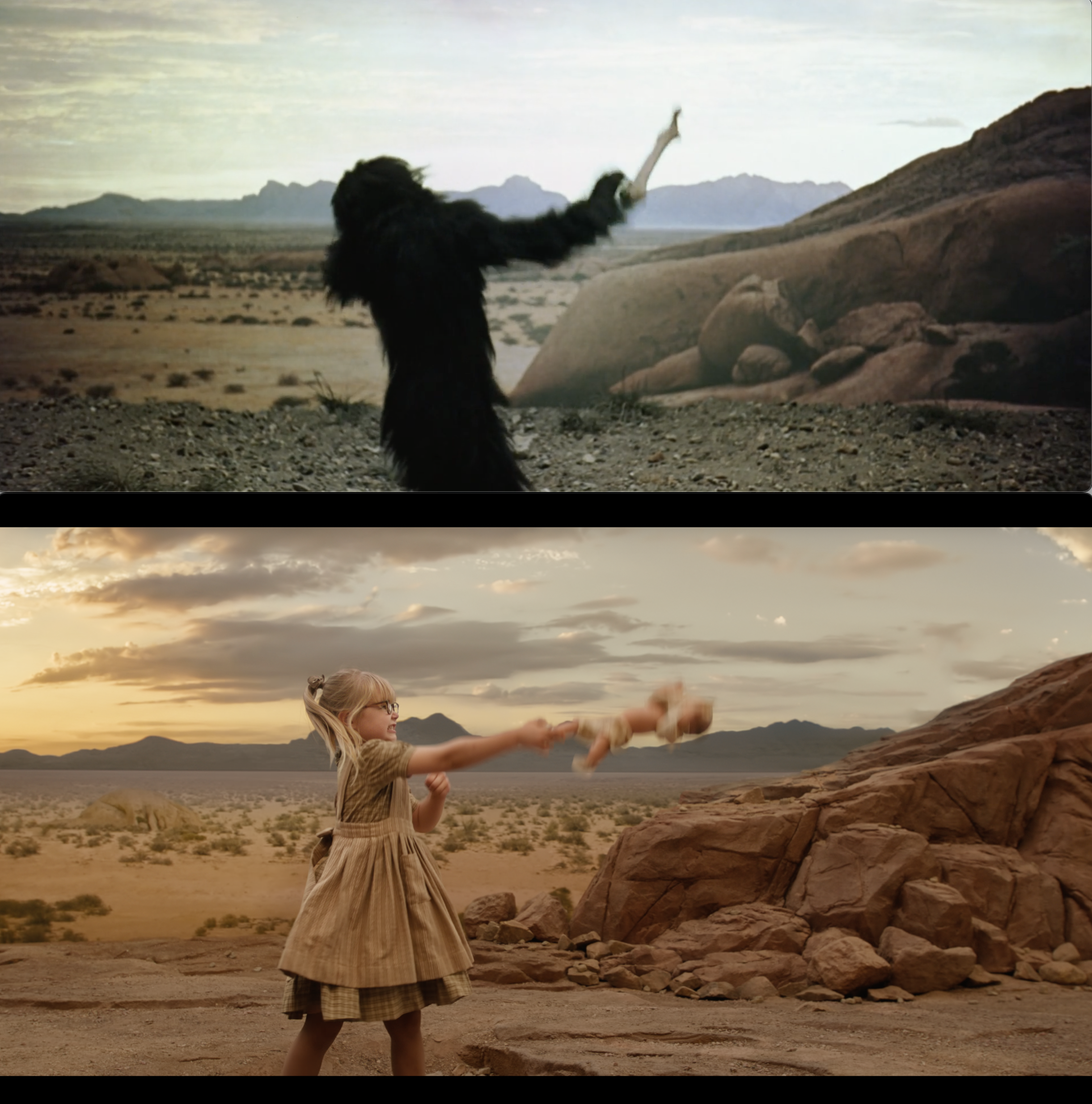
The tweet you see above is an absolutely perfect example of how the success of plausibility and believability of modern digital effects is used by bozos as evidence that "CGI sucks".

Because the suit in the "Iron Man" (2008) shot they're referring to is computer graphics, not a physical suit.


Another beautiful, chef's kiss example:


"Nope" was shot on film—the day-for-night material was shot on film AND digital infrared simultaneously, which were combined in the digital intermediate and every single sky in the movie [except one] was computer graphics/digital paintings.


Friday, January 13, 2023

TV Shows in High Definition

"Columbo" s02e04, in HD as it appears on Peacock

Important context for the discussion of "how easy is it to remaster an old TV show in HD?"

Old TV shows that were shot on film, edited and conformed on film:

  • Knight Rider
  • Columbo
  • Murder, She Wrote
  • M*A*S*H
  • The Love Boat
  • V

Old TV shows that were shot on film, edited and conformed on video:

  • Frasier
  • Scrubs
  • Star Trek: The Next Generation
  • Star Trek: Deep Space Nine
  • Friends
  • Seinfeld

Shows shot on film & edited and conformed on film -- the path to an HD restoration is straightforward. A scan of the already edited and conformed negative. Yes, color balancing and fixes are required.

"Star Trek: Deep Space Nine" s01e09, in standard definition as it appears on Paramount+

Shows shot on film but edited and conformed on video -- the path to an HD restoration is much more difficult. All filmed material needs to be scanned and that means hunting through original camera negatives. Then the whole show has to be reedited. MUCH MUCH MUCH more complicated.

Another complication for shows "shot on film but edited and conformed on video" - visual effects. The visual effects were finished at VIDEO RESOLUTION, while the rest of the live-action for the show was captured on film. The choices at this point are:

  •  upscale the video resolution visual effects (720x480) to HD (1440x1080)
  •  redo the visual effects from scratch at HD

The former is cheap and is generally unacceptable. The latter is very expensive and time consuming but looks much better.

This is why shows like "The Love Boat" made for a relatively easy HD transition, and shows like "Star Trek: The Next Generation" took years and millions of dollars to go to HD, and why we may never see "Scrubs" and "Star Trek: Deep Space Nine" in HD.


original Mastodon thread: https://mastodon.social/@tvaziri/109682809110719638


Saturday, January 07, 2023

"Captain Phillips" on HBO Max Has Broken Subtitles

Looks like the on-screen subtitles of Somali dialogue in “Captain Phillips” (2013) are broken on HBO Max in the U.S. Scenes in Somalia feature no on-screen subtitles (even when English CC is ON), unlike the English Blu-ray and DVD versions of the film which show the lines of dialogue in English.

Most likely, this is similar to the "Schindler's List" issue on Peacock (which has since been fixed!). The issue: two versions of the English-language-native movie are made available to the streaming service, a textless version for international use, and a version with English subtitles where appropriate burned into the movie (as was seen in English movie theaters upon initial release).

The textless version of the movie is used for streatming in non-English localities and the local language is subtitled with on-the-fly on screen graphics. The problem might be that HBO Max is serving the textless version of the film for English localities, like the United States.

view on YouTube

Originally pointed out by @FifthCrichton 

update Jan 8 2023: HBO Max has replicated the issue and has opened a ticket for it to be fixed.

Original tweet: https://twitter.com/tvaziri/status/1611765331911147521


update Mar 24 2023: HBO Max has fixed the problem!


Friday, January 06, 2023

New Rule: No New 4K Releases Until...

New rule (if I was in charge): a movie studio can’t release any 4K titles of their already-in-HD movies from their catalog until every single film they own the rights to has a solid HD release.

This is self-explanatory.

Original Mastodon post: https://mastodon.social/@tvaziri/109626147127311001 


"Why does OLD MOVIE's visual effects still hold up?"


"Why does OLD MOVIE's visual effects still hold up?"

  • shot design
  • planning and organization
  • taste
  • sticking to a plan
  • appropriate timeline
  • small volume of work
  • appropriate budget

These principles are timeless.

If you think a visual effects shot looks like crap, the people involved with the movie can point to one or more of these bullet points to indicate the reason.

Please note how none of these bullet points are about technique because making good art is technique-agnostic.


Original tweet: https://twitter.com/tvaziri/status/1611051014886674432


Wednesday, January 04, 2023

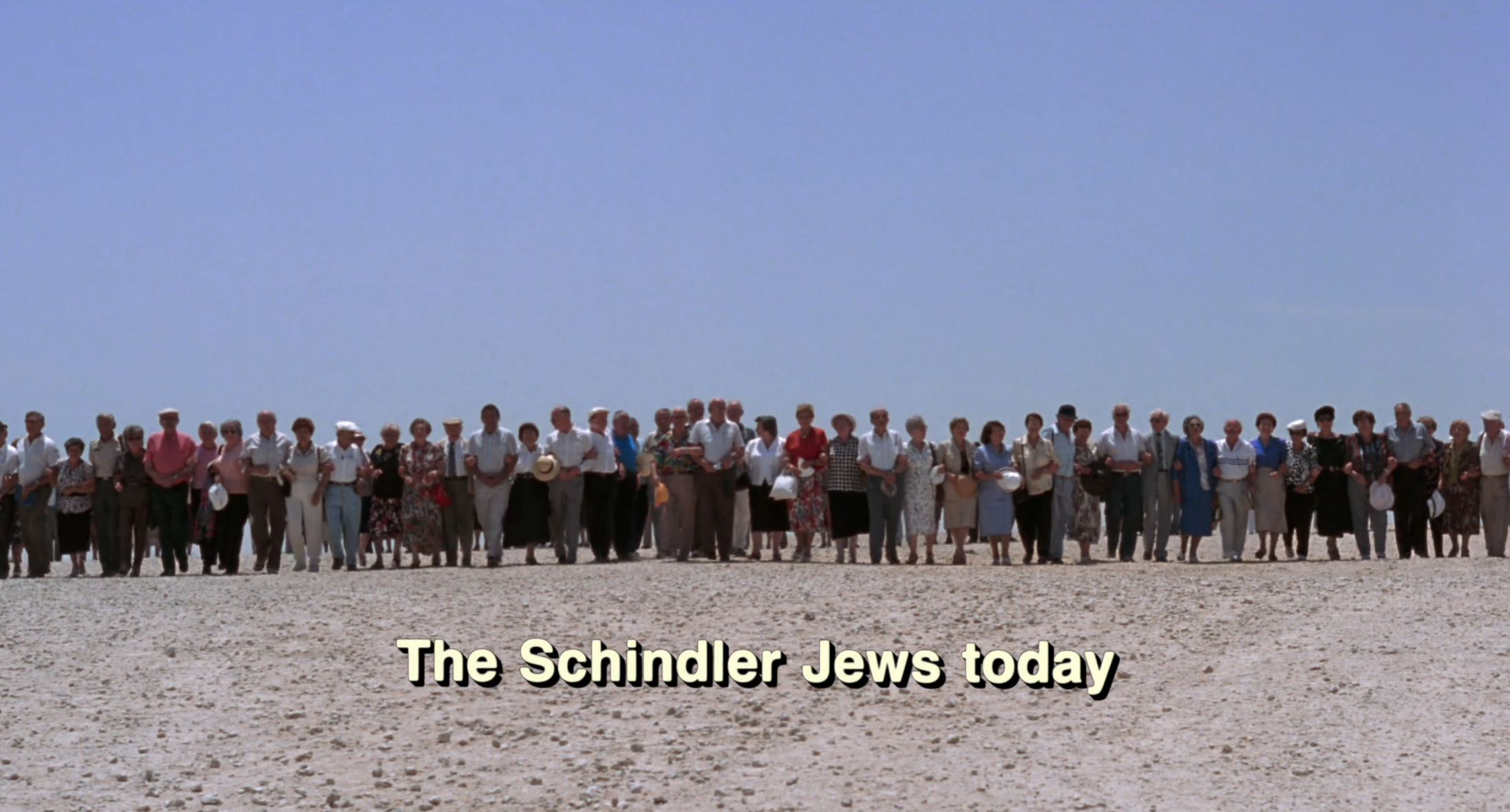
"Schindler's List" on Peacock Missing End Titles


There's a bit of a problem with "Schindler's List" (1993) as it appears on the Peacock streaming service in the United States. As of January 4, 2022, the end titles are missing from the film that describe the real-life events that happen after the end of the film. This is a bit of a problem because the viewer is missing vital information that was intended to be given, and leads to off-putting shots of 'nothing'. On Peacock, Goeth's execution shot (not featured in the comparison below) is particularly awkward since the shot ends with a ten-second long freeze frame of his body hanging from a noose, with no titles.

Look at the video below to see a comparison.

view on YouTube

This seems to be a localization issue - a textless version of the film is frequently created so that the on-screen titles can be presented in different languages instead of subtitles OVER the native language of the film (English). In this case, the textless version of the film might have been given to Peacock by Universal with the intention of the titles appearing as rendered-on-the-fly subtitle overlays in each user's local language.

I have sent this movie to @Peacock and @PeacockTVCare on Twitter. There's no "submit a problem"-type page on the Peacock web site that I've been able to find.

update: 3:06pm 2023-01-04 - Peacock fixed it! Screenshots from Peacock below:


Tuesday, December 06, 2022

A Beautiful Shot from "The Road to Singapore" (1931)

This is a wonderful shot from "The Road to Singapore" (1931) that does a brilliant job establishing geography and spatial relationships between two characters who are thinking about each other but who are physically apart. The audience understands their separation.

view on YouTube

It starts with a full scale shot of Doris Kenyon - the camera pans left behind an unlit tree, then we CUT to a miniature (1/8 scale?) which also has camera move that has an unlit tree in the foreground. At normal exposure you can't see the cut. Here's the first cut, brightened.

The miniature portion of the shot continues, pulls back behind more silhouetted foreground trees, and the second CUT appears, tying in another full scale shot of William Powell that has unlit trees in the foreground, as well. Here's the second cut, brightened.


On Powell's side, there's a scene painting (or a miniature?) of Kenyon's building in the background. Oh, there's also another hidden cut after the camera settles on the Powell side, most likely to shorten the shot before the camera swings around for Powell's closeup.

The long shot actually has 3 hidden cuts, clever tricks to establish the full geography on the B-side, and required lots of planning and careful execution. Most importantly, it supports the narrative and emphasizes what the characters are going through.

At the time of this writing, "The Road to Singapore" (1931) is now playing on HBO Max in the U.S.

Original tweet thread: https://twitter.com/tvaziri/status/1600154259961839616

Based on this tweet from Jack Kennedy: https://twitter.com/JackKennedy/status/1599924728755544064


Wednesday, November 09, 2022

My History of Visual Effects Writing


I’ve written about movies and visual effects on the internet on:

I don't know what I'll be doing in the future, but maybe it's a good idea to sign up for updates on what I might be up to in the future.

https://subscribepage.io/toddvaziri


Tuesday, November 08, 2022

Split Diopter and Mirrors in "The War of the Roses"


Look at this amazing two-shot scene from Danny DeVito's "The War of the Roses" (1989). In terms of craft, there's SO MUCH going on here, but none of it distracts from the characters and the story. The filmmaking craft on display here reinforces the narrative by creating a distinctive tone.

view on YouTube

Notice how the diopter is removed during the shot when Douglas hits the same distance from camera as Turner - choreographed to be removed in sync with his broad movement of hugging and kissing Turner, to make it nearly invisible upon first viewing.


Monday, October 31, 2022

Cinefex Spotlight - Todd Vaziri (From 2018)


Sadly, Cinefex shut down in early 2021. While our physical copies of Cinefex magazine live on, as does the iPad edition of classic issues (boy, how long will THAT continue to work?), the website was shuttered.

Back in 2018, Graham Edwards interviewed me for the Cinefex Blog. I'm reprinting it here because I am really proud of the interview.

Cinefex Spotlight – Todd Vaziri

Posted on August 29, 2018 by Graham Edwards

To create cinematic illusions, you need conjurors. In this series of spotlight interviews, we ask movie magicians what makes them tick.

Todd Vaziri is a lead artist and compositing supervisor at Industrial Light & Magic. His list of career highlights includes American Pie, Avatar, six Star Wars and two Star Trek films, three Transformers movies and an episode of The Colbert Report, and you might enjoy rummaging through his entertaining effects-centric blog FX Rant.

CINEFEX: Todd, how did you get started in the business?

TODD VAZIRI: I saw Return of the Jedi on my tenth birthday, and afterward devoured anything I could find about how the film was made. I vividly remember reading an official Lucasfilm magazine about the film – there was an entire section on the miniatures and stop-motion animation in the Endor battle, created by a company called Industrial Light & Magic. That made an enormous impact on me. Seeing how the magic was created didn’t ruin the movie experience for me at all. Quite the contrary – I was intrigued and inspired to see pictures of modern-day magicians creating these amazing illusions, like Paul Huston setting up the AT-ST on the miniature Endor set. Years later, I discovered Cinefex, which satisfied my cravings for more detailed stories on how these intricate visual effects were created, and the challenges faced by artists in bringing these otherworldly effects to life. Strange to think that Paul Huston is a colleague and friend now – we worked together on a shot for The Force Awakens.

After film school, and a few years spent writing about visual effects for my website, Visual Effects Headquarters, I packed up my car and drove from Chicago to Los Angeles with the dream of working in visual effects. I was fortunate enough to have been given a chance by Van Ling at Banned From the Ranch Entertainment. Aware of my visual effects writing and understanding my passion for the craft, he gave me a chance to help test out a new piece of software called Commotion, which was, at the time, a brand new and revolutionary tool for rotoscoping and digital painting. Van was a tremendous mentor and I owe him so much for giving me a chance.

CINEFEX: What aspect of your job makes you grin from ear to ear?

TODD VAZIRI: At the start of every production, I am overwhelmed with anticipation. The prospect of doing something new and exciting in a movie is daunting, intimidating and exhilarating.

CINEFEX: And what makes you sob uncontrollably?

TODD VAZIRI: When the harsh realities of the project schedule kick in, along with the inevitable design changes – that’s when I reach for the Kleenex.

CINEFEX: What’s the most challenging task you’ve ever faced?

TODD VAZIRI: I’m a bit of a heat ripple snob. Most digital effects trying to replicate heat shimmer from jet engines don’t appeal to me. They frequently end up, from a design perspective, too sci-fi and fantastic, calling attention to the effect rather than allowing it to exist as a part of a realistic scene. For Avatar, we tackled several shots with intense jet engine heat ripple, and I privately tasked myself with creating the best-looking heat ripple system we’d ever produced. The effects team and I worked together on a system that included the right kind of particles, the right animation, the right kind of displacement and blur, and other design elements that are usually ignored – like refraction, shadowing, and tiny bits of soot. I was really proud of how it all turned out. Later, hearing that Jim Cameron loved the look of our heat ripple made me very happy.


CINEFEX: And what’s the weirdest task?

TODD VAZIRI: I had to create dog urine for an Adam Sandler film. I used Particle World in After Effects to create the pee stream, and the splashing and splatter on the ground. I drew roto mattes and color-corrected the photography to simulate the growing puddle of pee. If I remember correctly, I think I also had to paint out the dog’s testicles.

CINEFEX: What changes have you observed in your field over the years?

TODD VAZIRI: Between the time I started doing feature film work and today, the biggest change has been the ubiquity and democratization of high-quality, highly complicated visual effects. Complex fantasy environments, creatures and invisible effects are no longer solely available to the five or six biggest-budgeted movies per year. Filmmakers like Scorsese, Cuarón, Iñárritu, DuVernay and del Toro now have access to effects that were previously unavailable to their types of films. As a movie fan, I’m thrilled that a movie like Ex Machina can be made today, with the same kind of complicated, high-quality visual effects that previously were relegated to only the biggest superhero films or sci-fi blockbusters.

CINEFEX: And what changes would you like to see?

TODD VAZIRI: Where to begin? I’d like to see a more level playing field on many dimensions. Right now, movie studios are understandably taking advantage of massive global incentives to make films in certain localities, but this severely tilts the scales and has serious repercussions on all sides.

In addition, just like the rest of Hollywood, we need to make visual effects production a more diverse, inclusive environment. There are too many people making movies who look like me, and who have similar histories, tastes and skill sets. We will be able to tell more dynamic, interesting stories by including more women and people of color in our industry.

We have a work-life balance problem in our industry, too. The hours and stress take their toll on visual effects workers around the world. Finally and more broadly, it is inexplicable how little power the visual effects industry has in Hollywood, while our work remains critical to the success of modern films.

CINEFEX: What advice would you give to someone starting out in the business?

TODD VAZIRI: The advice I’d give is similar to the advice I’d have for anyone who is interested in Hollywood filmmaking. Firstly, understand that this is not a glamorous job. The people who make films, both in front of and behind the camera – and behind the computer – are passionate and committed to their craft. If you’re not all-in on this as an idea, you might want to consider something else.

More practically, young visual effects artists sometimes get hung up on questions like: “Which piece of software should I learn?” My personal view is that the most successful visual effects professionals in my sphere are not obsessed with software or the technology itself, but are more interested in using those tools to create the imagery or tell the story that’s in their heads. I’m not technically minded at all, and yet I get by because the tools have become so accessible and approachable that even a dummy like me can operate the controls. Also, it’s incredibly important for young visual effects artists to watch and analyze non-visual effects films, and study as much photography as possible.

CINEFEX: If you were to host a mini-festival of your three favorite effects movies, what would you put on the bill, and why?

TODD VAZIRI: Citizen Kane – don’t roll your eyes at me, millennials! You’ll watch this black-and-white movie and like it! Orson Welles and his team were using the camera to tell a story like no-one did before – you can see many now-standard cinematic techniques used for the first time in this film. They pushed every department to its limits and beyond; the film includes special effects and optical work, several ingenious matte paintings, animation and miniatures. Gregg Toland’s deep-focus photography gave the film a striking look, as did all of the hidden optical tricks made possible by Linwood Dunn’s optical printer breakthroughs – like the massive set extensions at the political rally, or the building of Kane’s mansion, Xanadu.

Star Wars (1977 theatrical edition) – come on, do I really need to say why I chose this?

The Abyss – Jim Cameron’s epic underwater adventure used pretty much every single visual effects trick in the book, including the debut of a creature of a kind never seen before on film – the computer-generated pseudopod. The movie is an encyclopedia of photographic effects from the dawn of cinema to that moment, and simultaneously presents a prelude to cinema’s digital era.

CINEFEX: What’s your favorite movie theater snack?

TODD VAZIRI: Popcorn, no butter, a tiny bit of salt.

CINEFEX: Thanks for your time, Todd!

Sunday, October 30, 2022

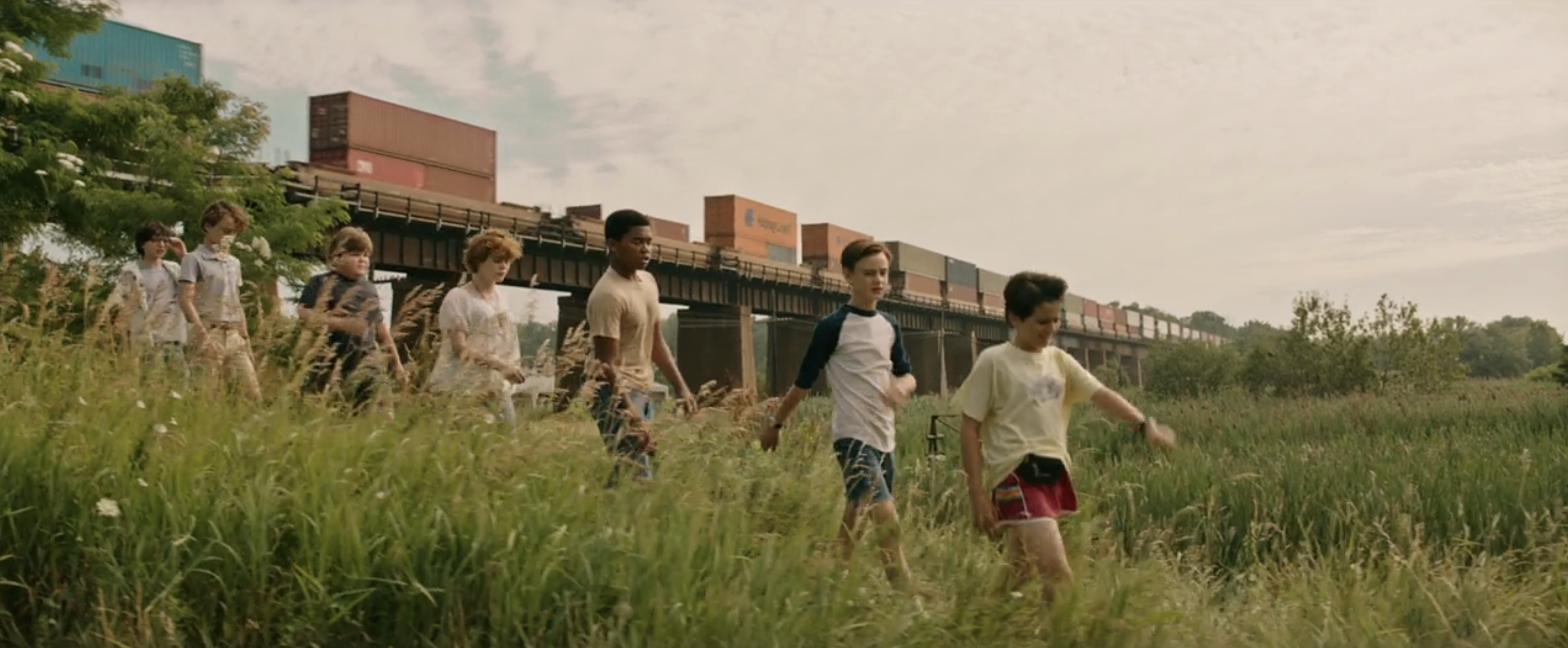
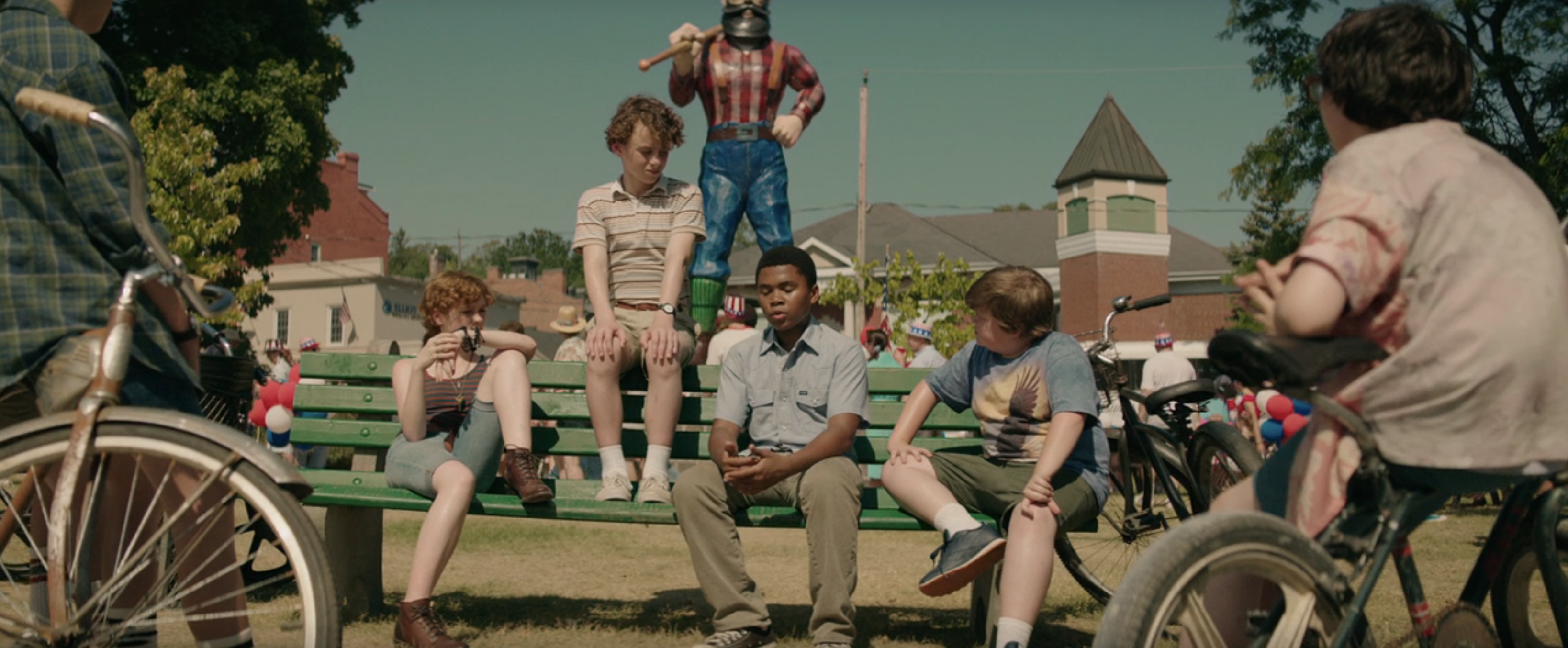
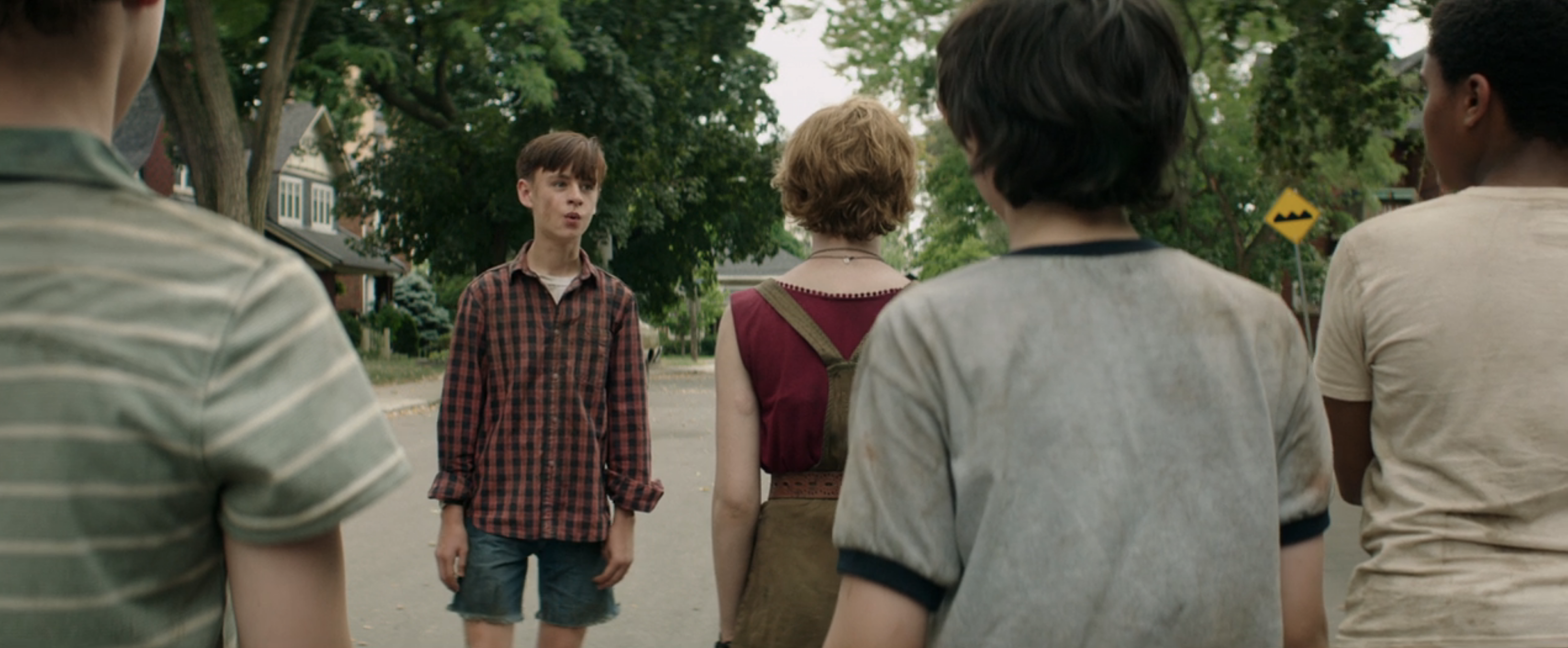
The "Group Shot" Blocking of "It" (2017)

There's a lot to like about "It" (2017). It's gorgeous, has an amazing cast, some genuinely scary moments and an incredible performance by Bill Skarsgård along with brilliant makeup, prosthetic and digital visual effects.

Our heroes are an ensemble, and I admire how director Andy Muschietti and cinematographer Chung Chung-hoon use the widescreen frame to include our heroes in group shots. Blocking shots like this can sometimes feel awkward (especially on set), but when cleverly blocked and used at just the right time, the 'wide shot of all our heroes' framing really does the job, sealing the unity of our main characters in their quest.