Showing posts with label cinematography. Show all posts

Thursday, June 13, 2024

Lighting Techniques and Style

This is just a simple apples-to-apples comparison in the most basic sense of lighting techniques and style. No judgment, no "this is right and this is wrong", just a comparison.

The Hollywood cinematography of the interior of a cave, daytime, in a big sci-fi feature film in 1968. "Planet of the Apes" (1968), cinematography by four-time Oscar winner Leon Shamroy (18 total nominations!) who also shot "Cleopatra" and "The Robe".


The Hollywood cinematography of the interior of a cave, daytime, in a big sci-fi feature film in 2012. "Prometheus" (2012), cinematography by Dariusz Wolski, who also shot "Crimson Tide" and the original "Pirates of the Caribbean" trilogy.


Sunday, October 30, 2022

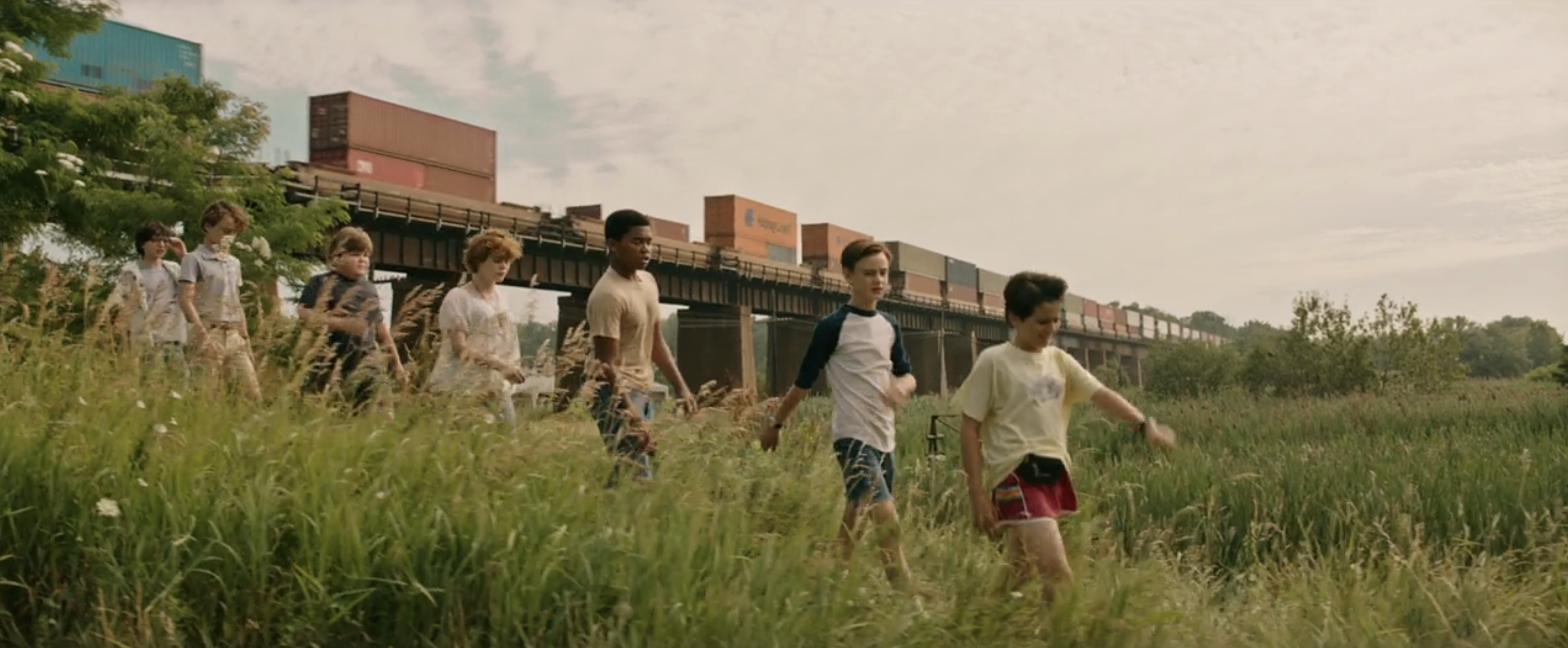
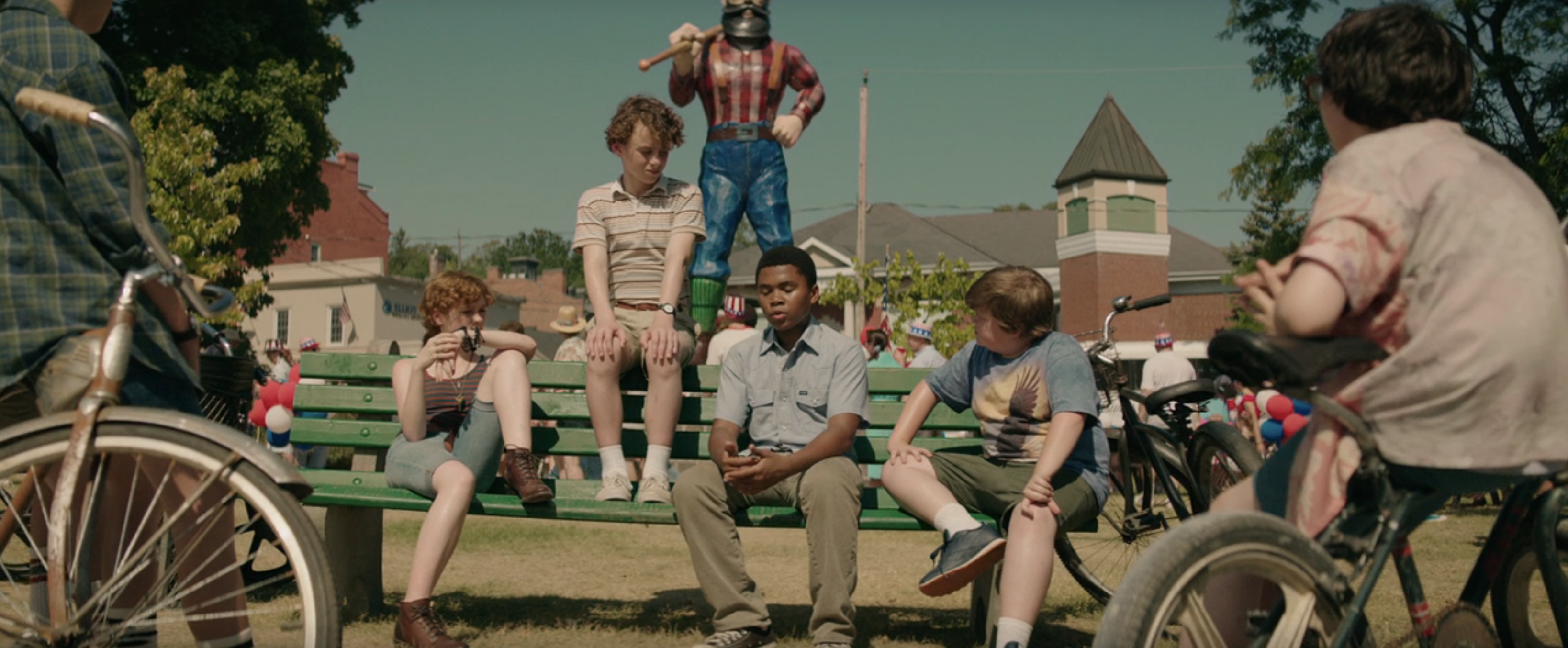
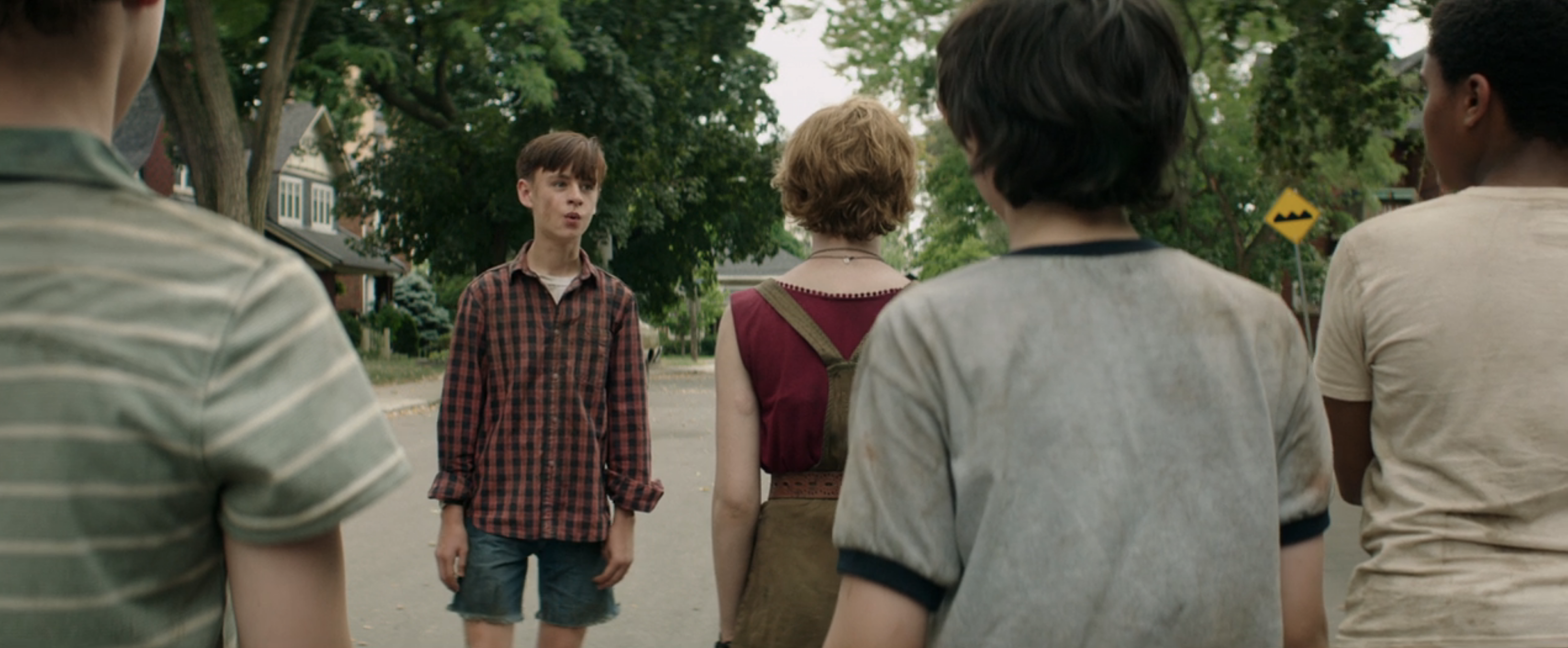
The "Group Shot" Blocking of "It" (2017)

There's a lot to like about "It" (2017). It's gorgeous, has an amazing cast, some genuinely scary moments and an incredible performance by Bill SkarsgÄrd along with brilliant makeup, prosthetic and digital visual effects.

Our heroes are an ensemble, and I admire how director Andy Muschietti and cinematographer Chung Chung-hoon use the widescreen frame to include our heroes in group shots. Blocking shots like this can sometimes feel awkward (especially on set), but when cleverly blocked and used at just the right time, the 'wide shot of all our heroes' framing really does the job, sealing the unity of our main characters in their quest.


Monday, September 10, 2018

The Cinematography of "Jaws"


I read this somewhere.

In an attempt to answer the question "What is great cinematography?", a solid answer is "if you can jump to any random frame of the movie and it looks *good*, THAT'S great cinematography." 

So I tried that with "Jaws" (1975):


"Jaws" cinematographer Bill Butler was nominated for an Oscar for his work on "One Flew Over the Cuckoo's Nest" that same year (1975). He shared the Oscar nomination with Haskell Wexler.


Thursday, July 18, 2013

The Aspect Ratios and Cinematographers of Steven Spielberg


Here is one of my many half-finished FXRant articles and graphics. I decided to just tidy it up and post it because, well, why not.  Plus, I wanted to publish it before Spielberg's next film was released.

I don't really have any grand, cogent conclusions to share, I just really wanted to visualize the aspect ratios, lens and film formats and cinematographers used by filmmaker Steven Spielberg over his 39 year film career. I've also indicated Oscar nominations and wins for cinematography on the graphic.

Notable notes:
  • Spielberg began his heralded career with no less than five anamorphic films in a row ("The Sugarland Express", "Jaws", "Close Encounters of the Third Kind", "1941" and "Raiders of the Lost Ark").
  • After "Raiders", 14 out of his next 18 films were shot in 1.85 aspect ratio with spherical lenses.
  • With 1993's "Schindler's List", Spielberg began his relationship with cinematographer Janusz Kaminski. Kaminski and Spielberg have now collaborated on 14 films in a row
  • All five of Spielberg's recent films have all been photographed in the 2.35 aspect ratio; all but one were shot with spherical lenses (Super35). The lone anamorphic film was "Indiana Jones and the Kingdom of the Crystal Skull".

Friday, November 05, 2010

A New Metaphor for 3D Stereo

I have a new metaphor to describe the studio-driven push for 3D stereo films.

I've said, and many agree, that 3D is not part of the natural evolution of cinema, like sound and color were. 3D is a paintbrush in an artist's toolbox to help tell a story - and not all filmmakers require this tool to tell their stories.

3D stereo is like Cinemascope in the '50s. Widescreen film was introduced as a cinema-only alternative to television. The beautiful wide canvas was born as a new tool for storytellers, but not every film requires it. And some films are simply wrong for it.

Today, six decades after widescreen was introduced, some filmmakers are still using it. But it's not appropriate for all films.

So, what's the difference between 3D and widescreen? Studios can charge more for 3D, while widescreen movie ticket prices were never surcharged a premium. That's why it's being shoved down our throats by studio executives and producers.

Tuesday, December 15, 2009

The Cinematography of "Let The Right One In," Part 2

In Part 1, we looked at cinematographer Hoyte van Hoytema's geometric motifs in "Let The Right One In." In this post, we look at some simply cool images from the film.

Images may contain minor spoilers.

Monday, November 16, 2009

The Cinematography of "Let The Right One In," Part 1

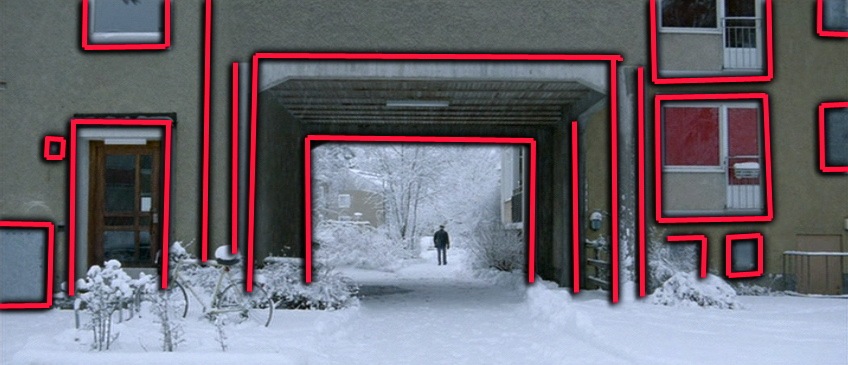
Illustrating a visual motif without being overt and obvious is not a simple task. Director Tomas Alfredson and his cinematographer Hoyte van Hoytema achieve this delicate balance in "Let The Right One In," the excellent Swedish thriller from 2008.

We'll present two posts on the cinematography of "Let The Right One In." In this post, we'll examine the geometric shapes formed within the images, and illustrating how the camerawork and production design work together to give the film a distinctive look. In the second post, we'll feature a few, simply cool images.

Hoytema frequently frames his shots with long lenses, allowing vertical and horizontal lines to remain parallel to the edges of the frame, giving the feeling of the shapes within the frame existing as subsets of the theater screen. Contrast this with, say, the wide-angle photography of Christopher Nolan's "The Dark Knight" (which we examined here: "Converging Lines and 'The Dark Knight'"). The production design and cinematography of "The Dark Knight" worked together to impart a sense of dread, a feeling of the decaying world collapsing around the characters. In addition, "The Dark Knight" was filmed with anamorphic lenses, which bow and bend straight lines giving even long lens shots a fish eye, distorted and abstract feel, while Hoytema chose to film "Let The Right One In" with spherical lenses (in Super35 for a 2.35 to 1 composition), minimizing distortion. Hoytema's images have straight lines that are parallel to the edges of the frame, emphasizing, coldness and geometric precision.

Alfredson, Hoytema and production designer Eva Noren use everyday objects to highlight this geometric precision. The window frames of Oskar's apartment building is used to great effect, along with the tiny jungle gym in the building's snowy yard (where we meet the mysterious Eli for the first time). Even props like the Rubik's Cube Oskar gives to Eli help drive home the visual theme.

For "Let The Right One In," the use of long lenses significantly reduces the impact of converging lines; wide lenses exaggerate perspective, while longer lenses compress perspective. When a zoom lens is framed on characters, it isolates and focuses the subject. Using longer lenses also exaggerates and enhances the feeling depth of field, so extreme foregrounds and backgrounds drift in and out of focus, further isolating our characters.

American Cinematographer Online has a short article about the film here, called "An Unusual Romance," from December 2008.

Images may contain minor spoilers.

In Part 2, we'll look at some simply cool images from the film. Go to Part 2.