Friday, May 17, 2013
This Poster Does Not Exist
A poster with Craig T. Nelson, Holly Hunter and Jason Lee" headlining "The Incredibles" does not exist because Pixar casts voice talent based on voice talent, rather than celebrity and name recognition.
Saturday, May 04, 2013
Sam Elliott, "Beef... It's What's For Dinner" Radio Spot
If you remember one of my earliest posts from 2007, I have an affinity for Sam Elliott.
I found an MP3 of a radio commercial narrated by Elliot around 2002, and have been obsessed with it ever since. I treasured this MP3. I'd play it for my co-workers, constantly. I'd even play it over the old ILM intercom on Fridays after 5pm. The commercial is hypnotic. And now I will share it with you, my friends.
It's a radio spot for Beef, narrated by the man himself, the voice of Beef, created by the Cattlemen's Beef Board and National Cattlemen's Beef Association, with Aaron Copland's "Hoe-down" (from Rodeo) underneath.
"Beef stroganoff. Beef Bourguignon. Irish Beef Stew. Beef Brisket. Chateau Brion. Saubraten. Roast Beef. Catalonian Beef Ragu. Mongolian Beef. Chicken Fried Steak. Steak Diane. Grilled Steaks Balsamico. Hamburgers. Sizzling Beef. Spicy Braised Beef. Barbecued Beef Ribs. Beef Wellington. Pepper Beef. Beef Jerky. Beef with Broccoli. Beef Burritos. Beef Fajitas. Beef Tacos. Do you see where I'm going with this? Beef. It's what's for dinner."
Beef.
Wednesday, May 01, 2013
Do Not Attempt
Here's proof that, perhaps, lawyers run the world.
This is the most bizarre disclaimer I've ever seen on a television commercial; far more peculiar than the standard "Do Not Attempt" disclaimer on most car commercials, even branding "Do Not Attempt" on commercials that are realized almost entirely with visual effects and cannot possibly be attempted in any way shape or form.
The actual disclaimer from the new BMW 5 Series commercial, "What You Love", underneath shots of a contented young boy sticking his hand out the window of a moving car:
"Sticking your hand out the window is dangerous. Caution children not to engage in this activity."
An activity as innocuous as sticking one's hand out a moving car's window to feel the breeze, as depicted in the commercial that I'm looking at right now with the sultry tones of Chris Pine's voice guaranteeing my son will be so satisfied with life if I drive a BMW he will ponder the poetry of the universe by feeling the wind against his hand, is considered to exceed a level of risk for the lawyers at BMW such that it forces such a dire warning. A hand. Out the window.
The commercial is saying "You see that thing you can do with our product? Yeah, don't do that. It's dangerous!"
In a few years, we will reach to volume of disclaimers seen in the "Happy Fun Ball" commercial.
Sunday, March 24, 2013
Movie Marketing is Hard! "From The Director of TRAINING DAY"
UPDATE: This post has been updated with an additional film. Click here to read.
Since directing the magnificent "Training Day" twelve years ago, Antoine Fuqua has directed five more feature films. Every single film predominately featured the exact same card in its trailer: "From the director of TRAINING DAY".
Showing my work-- feel free to click on these links: Tears of the Sun, King Arthur, Shooter, Brooklyn's Finest, Olympus Has Fallen.
Monday, March 18, 2013
John Parenteau's Thoughts on the VFX Industry
Hugo
John Parenteau's Thoughts on the VFX Industry, March 15, 2013
I was unfortunately not able to attend the VFX Solidarity town hall meeting last night, but I wanted to share some thoughts about the current state of the visual effects industry, and propose some possible solutions for all our futures. This might also help some of my non-VFX friends understand what's going on. So here I go!
As we all know, the visual effects industry has faced some challenging times recently, though most of these challenges have existed for years, and only now have reached a boiling point, and thus become visible on a national stage. Though the times are tough for many facilities and artists, it's this boiling point that will help to create change, and that in the end will be a good thing.
I feel there are some significant issues that face the industry as a whole. No single solution will fix the problems we face. A long term and competent solution for the industry will require, in my opinion, all of these items to be addressed simultaneously. This would, of course, seem to be an insurmountable task, yet if we are to survive as a vital business it is imperative that we work together to achieve results.
This is, of course, my opinion, but it is based on experience since the beginning of desktop technology, when visual effects unfortunately became a tangible commodity instead of an art form, where it should be. From about 1992 on, a large part of the business was comprised of eager artists who were simply excited to be part of the movie industry. Many of these artists went on to form companies, and though it was well intentioned, the problem was that none of these people (and I include myself in this) had any experience or training in running a business. Beyond our lack of ability to manage employees or create budgets, we lacked the backbone to form a real business model, and to enforce this with our clients. Instead, we fell in to a bizarre and truly ineffective (from a business perspective) method of operating that is the source of our problems today.
I will say here that though I feel outsourcing is a major problem, I also believe strongly that we cannot make our fight about that alone. The world will continue to expand, the artists in other countries will continue to learn, and it is only a question of time when those same artists have the skill set to produce visual effects on level with the best in our industry here. Even if we manage to force countries to remove incentives, which is highly unlikely, we are still faced with the fact that many other countries have lower cost of living, and thus will always be able to offer visual effects at an aggressive price.
What is important is to be leaders. Visual effects started here, and will continue to be here, if we are smart about how we approach the next phase of our existence. If we productively yet firmly work to create a solution between artists, facility owners and studios, we will continue to lead the industry worldwide, and thus ensure our jobs for a very long time.
Red Tails
So here are my suggestions to help solve our current problems:
1) Formation of a trade organization - The only thing that speaks in this industry is strength in numbers. The fact that every VFX studio works independently, with no standard of practices between them, no common bidding techniques, and NO ability to push back with the studios, makes us completely helpless to their needs. The heads of the VFX houses insist that they can stand alone, but they do so as their compatriots fall around them. At the same time, every facility bids viscously against each other, cutting our rates lower and lower simply to win an award. But many of these aggressive bids simply serve to keep the doors open, not to help build, and thus can be very damaging to the facility's future. Every visual effects company needs to realize that there is strength behind an organization, that working on common bidding practices based not on how aggressive you're willing to be, but rather a proper cost-plus model, will greatly strengthen each company. A trade organization will also give the group political strength to fight illegal incentives around the world, something any single house lacks the clout to tackle. But it is imperative that every company be a part of this organization. It will be impossible to show strength unless every company, large and small, works together in this.
2) Formation of an artist union - When I first started in the visual effects industry, I was working for Universal and Amblin Entertainment, both of which are located on a union lot. Because of this, the IATSE tried to unionize us. Unfortunately the attempt failed, and I believe that failure has led to some of our difficulties today. The combination of a trade association AND an artist union would provide the industry a strong voice in all visual effects matters, while ensuring both facility and artist are protected now and in the future. The big problem is that the cost of going union is too big for VFX houses to bear right now. At current rough estimates, an additional $8 an hour would be added to each artists' rate (not counting current facility contributions for health and pension, which would be replaced by the union). I have strongly encouraged the union to look carefully at this, and develop a plan to reduce this cost initially, and thus diminish the impact to facilities in a grander effort to achieve the union goal. Margins for facilities are essentially non-existent today, and there are no owners walking away with large profits, regardless of rumors you might hear. The largest argument against unionization has been the cost, and that is simply because there isn't the added money available. If the union works closely with large and small facilities to create a new paradigm, allowing artists to unionize for a small fraction of the current costs (perhaps with limited benefits at first), and then create a plan with those same facilities to slowly and carefully increase rates over a few years, it will allow the costs to be slowly incorporated in to future budgets. This is the only way that unionization will be embraced by facilities.
3) Create a new bidding model - From the beginning, VFX has been treated as a mechanical process, using computers and engineering as if we were creating widgets or tangible goods. But the truth is, what we create is art. I have bid extensively over the past years, often directly against some of the major facilities and teams in the business. I have realized that bidding is in no way an accurate process. Nearly every shot that is produced is a unique entity, never before created. It is next to impossible to accurately estimate the cost of producing a completely unknown effect before you actually create it. Imagine you are asked to create a shot of a giant alien creature rising out of the water. You are shown a single piece of artwork as reference. Sitting in front of an excel document, you have to guess how many days it will take you to create it, using a wide variety of disciplines. And you will be held to that number regardless of any complexity, known or unknown at that point. How does any artist know how much his or her art is going to take to produce, before they produce it? Has that exact shot ever been done? Most likely not, since every filmmaker and studio wants something unique and spectacular. So when we bid, we are totally guessing. Perhaps it's an informed guess, but it's still a guess. Combine that with the fact that most production-based VFX supervisors are looking not at the complexity of the shot in detail, but rather at an "average" cost per shot, based on their own "guestimate" in an effort to meet an overall budget mandated, often, by a producer who has to accommodate all the other aspects of producing that film. But because we are treated as if VFX is a mechanical process, we are being forced in to numbers that are often incredibly unrealistic. There needs to be a better way to bid that doesn't require us guessing long before any part of the show is created.
Red Tails
This may not be the perfect solution, but it is a way to ensure that the right amount of crew is hired, their costs are covered, and visual effects facilities are actually allowed a small amount of profit, while still covering their overhead. The important, and painful part, will be the negotiations between the trade organization and the studios (with an artist representative at the table), to establish what a base crew is, a standardized cost for said crew, and how much work this crew could create without adding additional team members. This base level might cover simple projects under 200 shots, for example, or simply be a negotiated starting point to build a crew that is capable of producing larger amounts of VFX for a blockbuster film. The process would be transparent between studio and facility, just as hiring a camera crew is transparent to production. But, with careful negotiations, and after some time, a new standard will be set, and the pain will subside. If this sounds like an unusual way to produce visual effects, just consider how the actual film production crew is hired and paid. This would be similar, with only the added component of adding cost for profit and overhead for the facility.
As I said above, this may not be THE solution, but it is a starting point toward A solution. We, as a community, both artist and facility owner, must solve this dilemma to avoid the continuing "race to the bottom" visual effects has become. Note that the studios have no interest in a trade organization, or to unionize artists. The current disarray of the business only serves to help them produce content as inexpensively as possible. And they cannot be blamed for this. We live in a capitalist society, and the studios have shareholders to appease as well. Their job, because it is show BUSINESS, is to make money. But many years ago, the unions faced similar challenges when it came to unionizing studio lots or film productions, and in the end the studios learned that they could still profit under what is now most likely perceived as the "reasonable conditions" the unions have set for crews. VFX is no different. There will be pain through the process, and there will be more challenges, but in the end these solutions will serve to revamp the industry in a way that is palatable to all parties, and we can return to the craft we all chose, namely telling stories.
Thank you for reading.
John Parenteau
John Parenteau is an Emmy-award winning visual effects professional whose credits include "Star Trek: Voyager", "The X-Files" and "seaQuest DSV", and was general manager of Pixomondo Los Angeles. He now runs Silverdraft, a supercomputer technology company. Read more at http://www.johnparenteau.com/
Sunday, March 17, 2013
We've Been Busy
Labels:
ILM,
Randomizer,
Star Trek,
Star Trek Into Darkness,
visual effects
Monday, February 25, 2013
The VFX Predictinator and The 85th Academy Awards
The visual effects team behind "Life of Pi" took home the Oscar for visual effects at the 85th Academy Awards. Congratulations to Bill Westenhofer, Guillaume Rocheron, Erik-Jan De Boer and Donald R. Elliott and everyone involved with the visual and special effects of the amazing film.
This also marks another victory for The VFX Predictinator, our formula for predicting the winner of the visual effects Academy Award. We created a unified formula that correctly predicts the outcome of the visual effects winner from 1989-2008; we used that same formula to correctly predict "Avatar" in 2009, "Inception" in 2010 and "Hugo" in 2011. Well, we got it right again for "Life of Pi" in 2012.
Before the awards ceremony, hundreds of visual effects professionals rallied for a VFX protest, complete with a plane flying a banner overhead that read "BOXOFFICE + BANKRUPT = VISUAL EFFECTS VFXUNION.COM". Read FXGuide's coverage here.
The awards ceremony itself was a debacle for the visual effects community. First, presenters of the visual effects Oscar Robert Downey Jr., Chris Evans, Mark Ruffalo and Samuel L. Jackson, all of whom have benefitted greatly from partnering with visual effects throughout their careers, joked around awkwardly with some poorly rehearsed schtick about respecting the artistry of visual effects. The winners were read, and midway through Bill Westenhofer's speech, the 'play-off' music began to rumble (John Williams' "Jaws"). Before Westenhofer could finish his statement, his mic was cut off and the director cut away to Nicole Kidman and her husband. Then, accepting the Best Director Oscar, Ang Lee failed to thank any visual effects members of his team. In addition, Oscar winner Claudio Miranda (for "Life of Pi"'s cinematography) also failed to thank any members of the visual effects team; strange for a film whose cinematography was extensively created by visual effects artists. Read The Hollywood Reporter's coverage here, and read Stu Maschwitz' article here for a classy recap.
My emotions are all tied up in strange knots; I'm thrilled and inspired by the current state of artistic achievement of our industry, and also saddened by our relative powerlessness in Hollywood.
Labels:
Academy Awards,
predictinator,
predicting the oscar
Sunday, February 24, 2013
With and Without Rhythm & Hues
A protest at this year's Academy Awards is taking place today to draw attention to the current state of the visual effects industry. While visual effects films are making billions of dollars at the box office, visual effects facilities are declaring bankruptcy and going out of business. The situation has never been more bizarre and ironic than the recent bankruptcy announcement of Rhythm & Hues, the visual effects shop that created the creatures of "Life of Pi", a film that has earned $580M worldwide, and, which many believe is the frontrunner to win the Oscar for visual effects at today's awards show.
"Piece of the Pi" Protest at the Academy Awards https://www.facebook.com/events/102072926647311/
I created these two graphics to illustrate the importance of visual effects to a film like "Life of Pi", and I'm thrilled that they've been passed around the internet to help with awareness of the current crisis state of the visual effects community.
Saturday, February 23, 2013
Visual Effects, Oscars and Box Office
Just like last year, I thought it would be interesting to see a breakdown of the average box office earnings of each of this year's 85th Academy Award nominees, per category.
And, just like last year, it is completely lopsided. Here is this year's chart, indicating the average domestic and international box office take of the nominees for each category, as of February 5, 2013. Click here for a larger version of the chart.
The average Oscar nominee for visual effects earned $763M (up from $662M last year). By comparison, the average nominee for Best Picture this year earned $202M, which is a particularly strong box office year for Best Picture nominees. Leading the pack in the visual effects race was "The Avengers" (which earned $1.5B), "The Hobbit 1" ($956) and "Life of Pi" ($548M).
The second highest grossing category is Best Music (Song) with an average of $503M box office earnings per nominee; the category was buoyed by hits like "Skyfall" ($1.1B), "Life of Pi" ($548M) and "Ted" ($529M).
Again, this should surprise virtually no one. I wrote all my caveats and explanations last year, so I won't rehash them here. This only proves that in each major cinema discipline that the Academy chooses to reward with a statuette, the average box office take of 'the best' visual effects films far exceeds any other discipline's 'best' work.
I wrote this last year when I charted the box office averages for the 84th Academy Awards:
It also illustrates the sad state of the visual effects community. The average Oscar nominee for visual effects made over $662 million globally, and yet our industry has relatively little power in Hollywood.
This is still true, of course.
Showing my work; a CSV of the data is here.
Wednesday, February 20, 2013
Oscar Pool Ballot, 85th Academy Awards
It's time for the Awesomest Oscar Pool Ballot In The History Of Oscar Pool Ballots.
Every year I create a special ballot based on the oscar.com printable ballot -- but on my ballot, each category has a different point value. The highest valued category is "Best Picture," while the mainstream films' categories are valued at two points. The non-mainstream categories (like the documentary and short film categories) are valued at one point.
This way, in a tight race for the winner, the winner most likely would not be determined by the non-mainstream films (i.e., blind guesses).
Download the ballot here for the 85th Academy Awards and use it at your Oscar party.
Every year I create a special ballot based on the oscar.com printable ballot -- but on my ballot, each category has a different point value. The highest valued category is "Best Picture," while the mainstream films' categories are valued at two points. The non-mainstream categories (like the documentary and short film categories) are valued at one point.
This way, in a tight race for the winner, the winner most likely would not be determined by the non-mainstream films (i.e., blind guesses).
Download the ballot here for the 85th Academy Awards and use it at your Oscar party.
And if you're wondering why Tom Cruise is on my ballot... he's been on every one of my Oscar ballots. Because he's soooooooooo cool.
The VFX Show Oscar Preview Podcast
Mike Seymour, Matt Wallin and I talk about the 85th Academy Award nominees for Best Visual Effects in FXGuide's The VFX Show #162. I had a great time chatting about all things visual effects.
Of course, we go into detail about this years' VFX Predictinator results and what it all means.
Show notes and link: http://www.fxguide.com/thevfxshow/the-vfx-show-162-2013-oscar-preview-show/
iTunes link
Of course, we go into detail about this years' VFX Predictinator results and what it all means.
Mike Seymour, Todd Vaziri and Matt Wallin discuss the five Academy Award nominated films in the VFX category and Todd Vaziri’s VFX Predictinator!
iTunes link
Tuesday, February 12, 2013
"Life of Pi" Wins at VES Awards
"The Avengers" took home two awards, while "The Hobbit: An Unexpected Journey" won one award; "The Impossible" won the award for Outstanding Supporting Visual Effects.
The following are winners for live-action feature film categories. To see all the nominees from feature film categories, click here; and to see all the winners visit FXGuide's coverage. For more information on Visual Effects Society, visit their website.
Outstanding Visual Effects in a Visual Effects-Driven Feature Motion Picture
Life of Pi
Thomas Fisher, Susan Macleod, Guillaume Rocheron, Bill Westenhofer
Outstanding Supporting Visual Effects in a Feature Motion Picture
The Impossible
Felix Bergés, Sandra Hermida, Pau Costa Moeller
Outstanding Animated Character in a Live Action Feature Motion Picture
Life of Pi: Richard Parker
Erik De Boer, Sean Comer, Betsy Asher Hall, Kai-Hua Lan
Outstanding Created Environment in a Live Action Feature Motion Picture
The Avengers: Midtown Manhattan
Richard Bluff, Giles Hancock, David Meny, Andy Proctor
Outstanding Virtual Cinematography in a Live Action Feature Motion Picture
The Hobbit: An Unexpected Journey
Matt Aitken, Victor Huang, Christian Rivers, R. Christopher White
Outstanding Models in a Feature Motion Picture
The Avengers: Helicarrier
Rene Garcia, Bruce Holcomb, Polly Ing, Aaron Wilson
Outstanding FX and Simulation Animation in a Live Action Feature Motion Picture
Life of Pi: Storm of God
Harry Mukhopadhyay, David Stopford, Mark Williams, Derek Wolfe
Outstanding Compositing in a Feature Motion Picture
Life of Pi : Storm of God
Ryan Clarke, Jose Fernandez, Sean Oharas, Hamish Schumacher
Tuesday, January 22, 2013
The VFX Predictinator, 85th Academy Awards Edition
UPDATE: We were right.
It’s time to fire up The VFX Predictinator!
Let’s summarize the history of The Predictinator in a few delightful bullet points:
- We created The VFX Predictinator in early 2010, before the 82nd Academy Awards. It’s a formula that accurately predicts the winner of the visual effects Oscar based on 20 years of data (1989-2008), using quantifiable criteria. [Part 1 of the series.]
- In 2010, we used the same formula to accurately predict “Avatar” as the winner of the visual effects Oscar. In 2011, the formula accurately predicted “Inception” to take home the gold. And in 2012, the same formula correctly predicted “Hugo” to win the Oscar.
- The VFX Predictinator is about predicting the Oscar winner using statistical methods of quantifiable data, summarizing Academy voters’ tastes with a formula; this is not a discussion about the artistic and technical achievements of each of the films, nor about who ‘deserves’ to win.
Since creating the formula, we’re three for three. In essence, we have a formula that has correctly predicted the visual effects Oscar winner for 23 years in a row.
Let’s see what The VFX Predictinator says about the nominees this year, the 85th Academy Awards nominees for Best Visual Effects:
Is The Predictinator’s choice of “Life of Pi” surprising to you? When it comes to popularity, “The Avengers” and “The Hobbit: An Unexpected Journey”, both gigantic blockbusters, are far more exposed than “Life of Pi”, a relatively small art house film directed by the celebrated filmmaker, Ang Lee. Before the nominations even were announced, I wasn’t shy with my early prediction that “Hobbit” would take home the gold. The staggering volume of quality work in both “Hobbit” and “Avengers”, along with the fact they’re both part of beloved franchises, I thought, might be enough to take either film to Oscar victory.
By the time the nominations were announced, however, the filmmaking community became much more aware of the astounding visual effects work in “Life of Pi”, and the film’s momentum really picked up.
“Life of Pi”’s Predictinator margin of victory over “Avengers” and "Hobbit", the films that earned the second and third highest scores, is similar to “King Kong”’s edge over “Lion Witch and the Wardrobe” from 2005, and also similar to last year’s “Hugo” victory over “Rise of the Planet of the Apes”. It’s not a decisive, overwhelming marginal victory (like 2001’s “Fellowship of the Ring” or 1997’s “Titanic”), but a solid victory nonetheless.
The whole point of The VFX Predictinator is to get into the head of the typical Academy voter, so let’s dive into the formula’s mechanics and see how each film scored its points, and how each films’ chances were strengthened or penalized by each piece of criteria as defined by The Predictinator.
Let’s start with the two films with the lowest scores, “Prometheus” (3.3 points) and “Snow White and the Huntsman” (3.78). These films had relatively modest box office tallies and were both released in June, and aren’t really on the Academy’s radar, only earning 1 and 2 Academy Award nominations, respectively. The primary effects for “Prometheus” did not consist of organic character animation, which hurts its chances, since Academy voters generally lean toward voting for films with prominent CG characters. “Snow White” certainly had its fair bit of character work, but doesn’t qualify for ‘main character CG facial acting’, since none of the CG characters had a significant ‘performance’ role in the film. We also gave this type of scoring to “Harry Potter 3” back in 2004, which also had a great deal of organic character animation, but no ‘main’ characters with facial acting performances. “Snow White” was the only film to have an Academy Award winning actor in a lead role (Charlize Theron), which earned it a point.
“Hobbit” and “Avengers” both had strengths and weakness, almost at opposites to one another. “Hobbit” had a modest Tomatometer rating (65%), while “Avengers” had the highest of the nominees (92%), and also doubled “Hobbit”’s box office take. “Avengers” was a box office behemoth, earning over $1.5 billion around the world, which earned it the most Box Office points (.82, versus “Hobbit”’s .35).
“Avengers” was a May release, which hurts its chances of winning the Oscar, as opposed to “Hobbit”’s December release date. And although Hulk is an important character in “Avengers”, the primary effects for the film revolve around the superheroes’ amazing abilities, fantastic environments (New York City, Helicarrier) and destruction effects, while “Hobbit”’s giant cast of animated characters qualify it for both animation categories. The two films earned almost the same Predictinator scores, as a result.
What gives “Life of Pi” its decisive edge? It had a very strong Tomatometer rating (89, right behind “Avengers”’ 92), and its release date was late in the year unlike most of its competition, which also helped its chances of winning the Oscar.
But the single most decisive criteria for “Life of Pi” is its Oscar acclaim. The film earned a total of 11 Academy Award nominations, far greater than any of its visual effects competition, and is generally regarded as one of the most critically acclaimed films of the year, along with “Lincoln”, “Django Unchained”, “Zero Dark Thirty” and “Argo”. “Hobbit” earned only three nominations, “Snow White” earned two, and “Prometheus” and “Avengers” only earned its visual effects nomination. With “Life of Pi”’s eleven nominations (second only to “Lincoln” with 12), it garnered a whopping 2.75 Predictinator points, while none of the other films earned the minimum threshold of nominations to receive any points in this criteria (four nominations are the minimum required to begin earning points in this criteria).
How important is Oscar acclaim? Over the last 23 years, the film that earned the most Oscar nominations among the nominees won the visual effects award 19 times. “Life of Pi” is absolutely on the radar of Academy voters.
An interesting observation about this year’s crop of nominees: we aren’t considering any of the five nominees sequels. “Hobbit” and “Prometheus” are prequels and “Avengers” has a gathering of existing characters from other film series, and was not a continuation of a specific film series. This is only the third time in 11 years where none of the nominees are considered sequels. (If a nominee is a sequel, the Predictinator formula takes away points, since the Academy historically doesn’t like awarding sequels.)
For a moment, forget about the statistical analysis and let’s think about the typical Academy voter. As The Los Angeles Times has shown in their “Who’s Who in the Academy” series, we know that the vast majority of Academy voters are white males over 60 years old. Historically, Academy voters prefer to reward safe, acclaimed films.
The typical Academy voter will feel good about voting for “Life of Pi”, a film created by a celebrated director, a film that is well-loved by the establishment, and also earned 11 total nominations. Voters will be much more hesitant to vote for “Avengers”. Although voters may have liked the film and appreciated the amazing character work of Hulk, “Avengers” is still another superhero movie that earned a billion and a half dollars at the box office. The story is similar with “Hobbit”; a voter will ask himself, ‘wait, didn’t we already give three visual effects Oscars to ‘Lord of the Rings’ movies? And they’re making three more? Voters are less likely to want to reward these films.
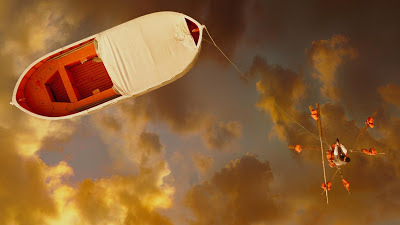
The visual effects of “Life of Pi” are also unique in another way; the world of the film is bathed in stylistic beauty unseen in recent films. The movie is dripping with aesthetic eye candy, particularly with its environment work. The dreamlike, surreal atmosphere of the world of “Life of Pi” is experimental and unlike typical visual effects films, and not dissimilar from another Oscar winner, “What Dreams May Come” from 1998. Both films took their abstract imagery to new heights, and Academy voters are keen to reward these kinds of films. As a reminder, “What Dreams May Come” took home the visual effects Oscar over another colossal blockbuster, “Armageddon”.
Also worth mentioning is the elephant in the room, which in this case is actually a fully photorealistic tiger. The computer generated Richard Parker in “Life of Pi” is regarded by nearly everyone who has seen the film as an extraordinary work of art. The realization of the tiger is a tremendous triumph of artistic visual effects creation, not dissimilar to the giant achievements in CG characters from “Terminator 2”, “Jurassic Park”, Gollum from “The Two Towers”, and Davy Jones from “Pirates 2”, all of which are Oscar winners for visual effects. The ultra-photorealistically animated and rendered tiger (and zebra, orangutan and hyena) in the lifeboat literally sitting in stylized, abstract environments invites discussions about the very nature of visual storytelling, combining realistic elements with fanciful worlds, and gets to the heart of the metaphors and narratives of the richly textured film. It’s a different type of visual effects film, and voters will want to reward it.
After creating The VFX Predictinator, some say that its predictions of “Avatar” and “Inception” victories were fairly, ahem, predictable. Its correct prediction of “Hugo”, however, showed that the formula can be thrown a serious curve ball and still hit a home run. I consider this another ‘curve ball’ year; both “Hobbit” and “Avengers” are well-exposed blockbusters, and “Life of Pi”, even with its tremendous visual effects, does not have an inevitable victory. We’ll see what happens when the Oscar winners are announced on February 24.
Labels:
Academy Awards,
predictinator,
predicting the oscar
Thursday, January 10, 2013
85th Academy Award Nominees for Visual Effects
The nominees for the 85th Academy Awards have been announced. As always, the winner of each category will be voted upon by the full Academy membership. The awards ceremony takes place on February 24, 2013.
Here are the nominees for Achievement in Visual Effects, for the 85th Academy Awards:
The Hobbit: An Unexpected Journey
Joe Letteri, Eric Saindon, David Clayton and R. Christopher White
Life of Pi
Bill Westenhofer, Guillaume Rocheron, Erik-Jan De Boer and Donald R. Elliott
Marvel's The Avengers
Janek Sirrs, Jeff White, Guy Williams and Dan Sudick
Prometheus
Richard Stammers, Trevor Wood, Charley Henley and Martin Hill
Snow White and the Huntsman
Cedric Nicolas-Troyan, Philip Brennan, Neil Corbould and Michael Dawson
Labels:
Academy Awards,
predictinator,
visual effects
Wednesday, January 09, 2013
VES Announces Nominations for 11th VES Awards
The Visual Effects Society has announced the nominees for the 11th Annual VES Awards.
"The Hobbit: An Unexpected Journey" leads all live-action feature film nominees with seven nominations. "Life of Pi" and "The Avengers" earned six nominations, while "Prometheus" earned three, and "Battleship" and "The Impossible" earned two each.
Also earning nominations in live-action feature film categories was "The Amazing Spider-Man", "The Dark Knight Rises", "Flight", "Total Recall", "Argo", "Zero Dark Thirty", "Rust and Bone", "Men in Black 3".
The awards will take place on February 5, 2013 at the Beverly Hilton Hotel.
The following are nominations for live-action feature film categories. To see all the nominations, visit FXGuide's coverage. For more information on Visual Effects Society, visit their website.
Outstanding Visual Effects in a Visual Effects-Driven Feature Motion Picture
The Hobbit: An Unexpected Journey
Joe Letteri, Eileen Moran, Eric Saindon, Kevin L. Sherwood
Prometheus
Paul Butterworth, Charley Henley, Allen Maris, Richard Stammers
Life of Pi
Thomas Fisher, Susan Macleod, Guillaume Rocheron, Bill Westenhofer
The Avengers
Susan Pickett, Janek Sirrs, Jeff White, Guy Williams
Battleship
Grady Cofer, Pablo Helman, Jeanie King, Glen Mcintosh
Outstanding Supporting Visual Effects in a Feature Motion Picture
Rust and Bone
Béatrice Bauwens, Cédric Fayolle, Nicolas Rey, Stéphane Thibert
The Impossible
Felix Bergés, Sandra Hermida, Pau Costa Moeller
Argo
Matt Dessero, Leslie Hough, Gregory McMurry, Tom Smith
Flight
Kevin Baillie, Michael Lantieri, Chris Stoski, Ryan Tudhope
Zero Dark Thirty
Geoff Anderson, Chris Harvey, Jeremy Hattingh
Outstanding Animated Character in a Live Action Feature Motion Picture
The Hobbit: Goblin King
Jung Min Chan, James Jacobs, David Clayton, Guillaume Francois
The Hobbit: Gollum
Gino Acevedo, Alessandro Bonora, Jeff Capogreco, Kevin Estey
The Avengers: The Hulk
Marc Chu, John Doublestein, Cyrus Jam, Jason Smith
Life of Pi: Richard Parker
Erik De Boer, Sean Comer, Betsy Asher Hall, Kai-Hua Lan
Outstanding Created Environment in a Live Action Feature Motion Picture
The Hobbit: Goblin Caverns
Ryan Arcus, Simon Jung, Alastair Maher, Anthony M. Patti
Prometheus: LV-233
Julien Bolbach, Marco Genovesi, Martin Riedel, Marco Rolandi
The Avengers: Midtown Manhattan
Richard Bluff, Giles Hancock, David Meny, Andy Proctor
Life of Pi: Open Ocean
Jason Bayever, Sho Hasegawa, Jimmy Jewell, Walt Jones
Outstanding Virtual Cinematography in a Live Action Feature Motion Picture
The Hobbit: An Unexpected Journey
Matt Aitken, Victor Huang, Christian Rivers, R. Christopher White
The Avengers : Downtown Manhattan
Colin Benoit, Jeremy Goldman, Tory Mercer, Anthony Rispoli
Total Recall: Hover Car Chase
Daniel Baldwin, Mattias Forsstrom, Sam Schwier, Joshua Wassung
The Amazing Spider-Man
Rob Engle, David Schaub, Cosku Turhan, Max Tyrie
Outstanding Models in a Feature Motion Picture
The Avengers: Helicarrier
Rene Garcia, Bruce Holcomb, Polly Ing, Aaron Wilson
The Impossible: Orchid Hotel
Markus Donhauser, Patrick Lehn, Angel Martinez, Juergen Pirman
Men in Black 3: Cape Canaveral/ Apollo Launch
Craig Feifarek, Hee-Chel Nam, Erik Neill, Taehyun Park
The Dark Knight Rises: Airplane Heist
Scott Beverly, Alan Faucher, Ian Hunter, Steve Newburn
Outstanding FX and Simulation Animation in a Live Action Feature Motion Picture
The Hobbit: An Unexpected Journey
Areito Echevarria, Chet Leavai, Garry Runke, Francois Sugny
Life of Pi: Storm of God
Harry Mukhopadhyay, David Stopford, Mark Williams, Derek Wolfe
Battleship
Florent Andorra, Willi Geiger, Rick Hankins, Florian Witzel
Life of Pi: Ocean
Jason Bayever, David Horsley, Scott Townsend, Miles Vignol
Outstanding Compositing in a Feature Motion Picture
The Hobbit: An Unexpected Journey
Jean-Luc Azzis, Steven Mcgillen, Christoph Salzmann, Charles Tait
Life of Pi : Storm of God
Ryan Clarke, Jose Fernandez, Sean Oharas, Hamish Schumacher
The Avengers: Hulk Punch
Chris Balog, Peter Demarest, Nelson Sepulveda, Alan Travis
Prometheus: Engineers & the Orrery
Xavier Bourque, Sam Cole, Simone Riginelli, Denis Scolan
Subscribe to:
Posts (Atom)