Thursday, January 14, 2016

88th Academy Award Nominees for Visual Effects

The nominees for the 88th Academy Awards have been announced. As always, the nominees were determined by the visual effects branch of the Academy after attending a bake-off of 10 films.  The full Academy membership will vote on the winners of each category.  The awards ceremony will take place on February 28, 2016.

Here are the nominees for Achievement in Visual Effects for the 88th Academy Awards. Congratulations to all who helped bring these images to the screen.  Of course, we will run the numbers of The VFX Predictinator 2.0 soon... stay tuned!

EX MACHINA
Andrew Whitehurst, Paul Norris, Mark Ardington, Sara Bennett

MAD MAX: FURY ROAD
Andrew Jackson, Tom Wood, Dan Oliver, Andy Williams

THE MARTIAN
Richard Stammers, Anders Langlands, Chris Lawrence, Steven Warner

THE REVENANT
Rich McBride, Matthew Shumway, Jason Smith, Cameron Waldbauer

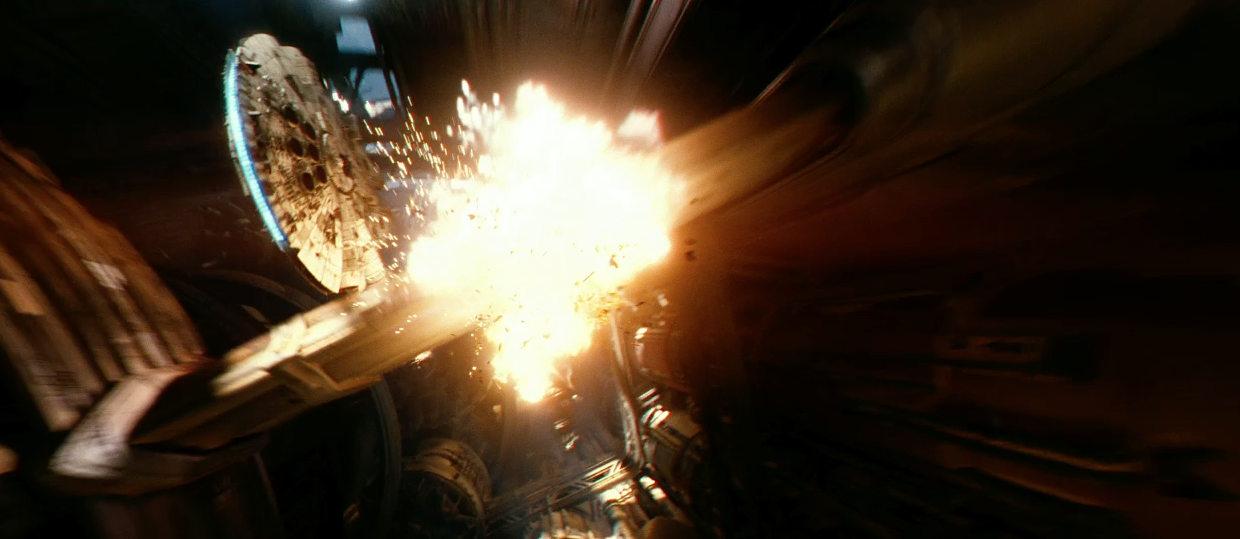
STAR WARS: THE FORCE AWAKENS
Roger Guyett, Patrick Tubach, Neal Scanlan, Chris Corbould


Wednesday, January 13, 2016

Making The Predictinator Right

What is The VFX Predictinator? Start here.

In the last article, we discussed how The Predictinator got it wrong. Before deciding if we should continue predicting the Oscar winning visual effects film with our current formula, alter it, or (gasp!) abandon it, we examined two questions that might help us make a decision:

• Has there been a slow change in how visual effects films are perceived by the Academy, causing members to vote differently?
• Are we missing something that has been in front of our eyes the whole time?

First, let’s take a look at the potential changes that have occurred over the last decade.


WHAT HAS CHANGED?
In the early days of digital visual effects, only a few filmmakers were confident and comfortable in helming multi-million dollar visual effects blockbusters. Oscar winning visual effects films were dominated by directors like Robert Zemeckis, Peter Jackson, Steven Spielberg, James Cameron and the Wachowski siblings, largely making wondrous, successful crowd-pleasing blockbuster visual effects films.

But as time went on, complicated visual effects became more accessible to a larger pool of filmmakers at greatly reduced costs. In the modern era, visual effects became a tool of art-house, ‘important’ and ‘prestigious’ filmmakers like Martin Scorsese, Ang Lee, and Alfonso Cuaron, filmmakers who regularly make Oscar-caliber films.

Incidentally, all three of those directors have directed Oscar-winning visual effects films within the last decade. And six out of the last seven visual effects Oscar winners were also nominated for Best Picture.

With breakthroughs created for films like “The Abyss”, “Terminator 2” and “Jurassic Park”, audiences (and Academy voters) were amazed by the fidelity of digital creatures, something audiences had literally never seen before.  In fact, the reason The Predictinator’s data set begins in 1989 is because that was the year “The Abyss” was released, which ushered in the new era of digital effects.

The next two decades saw films that had a heavy presence of digital creatures win Oscars. Year after year, films featuring Gollum, Davy Jones, King Kong, a talking pig, and talking polar bears were winning Academy Awards. This is why our formula gives so much weight to two criteria: organic creatures and organic creatures that talk. However, the full Academy seems to be valuing these breakthrough digital creatures less each year, particularly noticeable in the disregard of the two recent “Planet of the Apes” films featuring astoundingly realistic all-digital apes. While audiences still make blockbusters out of films with digital creatures, the Academy seems less likely to award a visual effects Oscar to a film solely for the presence of its quality digital characters.

Audiences now expect Gollum-quality digital characters in their films, and the Academy may no longer reward a film solely for hitting this quality standard. The bar for the “wow” factor has been raised. In fact, four out of the last five Oscar winning visual effects films had no significant digital characters.


WAS THERE SOMETHING ESSENTIAL MISSING?
Our formula couldn’t differentiate between “Interstellar” (a prestige-leaning ‘classy’ Oscar film) and the well-reviewed, popular crowd-pleasing comic book film “Guardians”. Were there characteristics of “Interstellar” that could be quantified to boost its point value? Were there essential characteristics of a film like “Guardians” that could be quantified to reduce its point value? And would these be universal truths, correctly impacting past and future contests?

Like we mentioned in the previous article, “Interstellar” had a respected, auteur director (could we quantify that, somehow?). The film was touted as a heavy ‘practical effects’ film (is there a way to quantify miniatures and physical sets?). Are we hurting ourselves by using the Tomatometer as a gauge for critical acclaim, since crowd-pleasing popcorn films can garner higher Tomatometer scores than prestige pictures like “Interstellar”?

As for “Guardians”, it had a strong comedic bent (how on earth does one assign a point value to humor? I mean, even the esteemed Golden Globes doesn’t have any idea how to classify a comedy. Oh, look, “The Martian” just won the Golden Globe for Best Comedy!). “Guardians” is part of the Marvel Cinematic Universe, but isn’t a sequel (so do we just ding it for being a Marvel film? That seems too specific).

WHAT DO WE DO?
We were stuck.

We were not comfortable with abandoning our little formula, just because it broke once. We would not let it die; we’re too proud of it. And we were not ready to accept that it would occasionally be wrong. That’s no fun at all.

We could have fractured the Predictinator into two distinct time periods, breaking it up into two separate formulas, to account for our perceived changes to the industry we outlined above. That option seemed inelegant; our goal was a single, polished formula to rule them all. We could have tinkered with the criteria and how each piece of data is weighted against one another, but, even with the slightest tweak, we quickly realized the entire formula would fall down like a house of cards. This thing is pretty well-calibrated, and can’t withstand much tinkering without destroying itself.

The only option remaining, we thought, was to add a new magic piece of criteria that would solve our problem, without breaking the rest of the formula. And we wanted to add something that had a universal truth, not a statistical hack. For example, we weren’t going to add the criteria “Does the title of the film include the word ‘Guardians’? Minus one point!”

So we thought about it. For nine months. (Hey, we were busy!)


THE “I’VE GOT IT” MOMENT
One day, my wife was in the kitchen, I was in the living room. She just blurted out, “I’ve got it.”

And it was staring us in the face every time we looked at the full spreadsheet of films from 1989-2014. She had figured out a new piece of easily quantifiable criteria that would simultaneously de-emphasize digital characters as well as bolster the power of a ‘prestige’ film.

“Is the film based on a comic book? Minus one point.”

Duh. It seems so obvious now. Historically, and for the foreseeable future, Academy members simply do not give Oscars to films based on comic books. Peering into their headspace, I suspect they consider these films to be pure popcorn and not worthy of the honor of receiving an Academy Award. We posit that subtracting a Predictinator point for films “based on a comic book” will not only slightly de-emphasize digital characters, but will strengthen point values of prestigious films that frequently win visual effects Academy Awards.

My wife executed a simple masterstroke that not only fixed the “Interstellar” year, but also bolstered the historical data. Since 1989, only one film based on a comic book has won the Oscar. “Spider-Man 2” is the lone victor, with 12 comic book films going home empty handed. Even our most difficult year, 1992, was made easier with this tweak. Instead of “Death Becomes Her” squeaking past “Batman Returns” by a narrow margin, it now crushes the caped crusader with the new criteria. (By the way, the single comic book winner, “Spider-Man 2”, still commands its victory over its next contender, “Harry Potter 3”.)

Here is what the data looks like. Again, the only thing that we changed to the formula is a single line item, “Is the film based on a comic book?” If so, one point gets deducted. No other criteria values were changed. “Interstellar” now wins the Academy Award for visual effects. Presenting The VFX Predictinator 2.0.

(((RT Score/ Sum of all noms' RT Score) X 5)^2) + (BO (millions)/ BO Total of all noms) + (Academy Noms (only if 4 or more) X .25) + (((Month of Release / Total Month of Release) X 2.5)^2)* + (Sequel = -.5) + (Prior Sequel won Oscar = -1) + (Primary FX organic creatures = 1) + (Primary organic creatures include facial acting = .75) + (Lead Actor an Academy Award Winner = 1) + (Film based on comic book = x(-1)) = Final VFX Predictinator Score

*value has an upper limit of 1


Looking toward the future, the frequency of comic book films is increasing. Marvel films are a cinematic juggernaut- the twelve Marvel movies have grossed over $9 billion worldwide, and every movie studio is building their own universes, flooding the future movie market. The vast majority of these films are aimed at young audiences, consistently hitting explosive levels of risk-averse, family-friendly PG-13 mayhem. These films will continue to earn visual effects Academy Award nominations, because the best visual effects facilities in the world are creating outrageous, spectacles and otherworldly characters for them. The films will continue to perform well at the visual effects bake-offs, and will continue to earn Oscar nominations.

Prestige pictures, however, they are not, and I think the Academy will continue to resist rewarding comic book films.

We’re going to stick with this, The Predictinator 2.0, for a while. Well, at least for this year.

The nominations for the 88th Academy Awards will be announced Thursday, January 14, 2016. We will run the numbers through The VFX Predictinator 2.0 sometime after.


Tuesday, January 12, 2016

The Predictinator Got It Wrong


What is The VFX Predictinator? Start here.

Last year, we were wrong.

For the first time since we created The VFX Predictinator, a single formula my wife and I created that correctly predicted the winner of the visual effects Academy Award from 1989 to 2013, our formula got it wrong. The algorithm predicted that “Guardians of the Galaxy” would take home the Oscar for visual effects, based on a number of quantifiable data points including its strong box office, overwhelming critical acclaim, and its inclusion of talking creatures as its primary visual effects. Sadly (at least for our formula as well as our egos), “Interstellar” took home last year’s visual effects Oscar.

As I wrote before last year’s Oscars, I was deeply concerned about the accuracy of the Predictinator’s prediction.  One could hear the anxiety in my voice, as I appeared on The VFX Show podcast to talk about our Oscar guesses.  Leading up to the actual ‘running of the numbers’, my gut said that “Interstellar” would be the front runner. My wife even said, just moments after she entered the numbers into the spreadsheet, “Well, I guess this time The Predictinator will be wrong.” She was right about that.

Last year's Predictinator results. Full article.

In the months since the Oscar telecast, we’ve recovered from the initial disappointment of getting it wrong, then looked back at the two films and tried to break down exactly why the Academy membership voted the way it did.

WHY “INTERSTELLAR” WAS DESTINED TO WIN
We built the formula to demystify the core values of the Academy voter. We realized a predominant and consistent value is what we define as the “prestige” factor. Academy members tend to vote for films directed by experienced filmmakers; inventive, beautiful movies that are regarded as “important”. Academy voters want to feel smart and forward-thinking, not just simply rewarding popular, popcorn films.

Critics saw “Interstellar” as flawed but beautiful.  It featured the much-loved Matthew McConaughey and Anne Hathaway (both Oscar winners) and a respected director, Christopher Nolan.  The visual effects were (arguably) not necessarily groundbreaking, but the gorgeous imagery visual effects created by the effects team was one of the reasons the film was highly regarded.  In the abstract, the visual effects in Nolan’s film also had a heavy ‘practical’ emphasis, pushed by the film’s marketing, which ingratiates itself to the Academy’s largely older voter base. The film was certainly considered the most prestigious movie nominated for the Visual Effects Oscar in 2014.


We represent this “prestige” factor in a few ways in The Predictinator: the Rotten Tomatoes score which measures critical acclaim, total number of Academy Award nominations, and Actor Prestige (if the lead actor has previously won an Oscar). By our numbers, “Interstellar” had a lot going for it, but didn’t earn it enough points to beat “Guardians"’s final score. Its Tomatometer value, while a respectable 72%, was the lowest in the category with crowd-pleasing superhits scoring higher. The film earned five Oscar nominations, which are hugely important to the Predictinator score. Even its star, McConaughey, had an Oscar under his belt (Actor Prestige).

The Academy has also historically favored movies with creatures--especially creatures that talk--in the visual effects category.  The Predictinator accounts for that, and in this area Nolan’s film suffered.  On the other hand, the Academy rarely looks kindly on any sort of sequel; a sequel is almost directly at odds with "prestige", since they are routinely looked upon as derivative, unoriginal, and cash-grabby.  In this case, “Interstellar” benefited. 

As you can see, “Interstellar” had the qualities the Academy wants in a winner, but our formula didn’t give it enough points to win.

WHY “GUARDIANS” WAS NEVER GOING TO WIN
We talked about everything on “Interstellar”s side; now let’s discuss why “Guardians” could not win the Oscar, even though The Predictinator gave it a higher score.

At its core, “Guardians” is a crowd pleasing, funny film. The Academy historically ignores comedies. Very rarely do comedies earn Oscars nominations, and even more rare is a comedy win (modern exceptions include Kevin Kline’s Best Supporting Actor win for “A Fish Called Wanda”, and Marisa Tomei's Best Supporting Actress win for "My Cousin Vinny"). The only comedy to win a visual effects Oscar is “Death Becomes Her” which, if you remember, was extremely difficult for the Predictinator to correctly predict. “Guardians” was tied for the highest Tomatometer rating of the year, but that score indicates overwhelming, general positive enthusiasm for the film, not “prestige”. To that point, “Guardians” only had one other Oscar nomination (for makeup), which hurt its Predictinator score.

“Guardians” is also part of a film series, a part of the Marvel Cinematic Universe. Although it’s not strictly a sequel, the film operates thematically and structurally within the confines of an overwhelmingly popular film franchise, and is branded as such. The Marvel name is as prominent as a “2” in the marketing of the film. As we’ve seen, Academy voters regularly avoid rewarding sequels with Oscars; we did not score the film as a sequel, but had we, it would have been dinged ½ point, giving “Interstellar” more of an advantage.

Finally, “Guardians” is regarded as another superhero movie (we will not quibble about the superhero powers--or lack thereof--of the protagonists of the film), which the Academy is also shy of rewarding. The Academy, largely made up of folks older than 60 years old (hey, look, the visual effects branch is the youngest branch, by far!), regards superhero films as childish fare, quite the opposite of important films that deserve to be lauded. Rarely do superhero films like “Batman”, “Superman” or “Iron Man” win Oscars (the lone exception since 1989 is “Spider-Man 2”). Academy voters are less likely reward a genre of film that regularly reboots and restarts itself (for example, Keaton, Kilmer, Clooney, Bale, Affleck... that’s an average of a new Batman every 5.5 years).

All this said, the Predictinator latched onto some key data points: “Guardians”’ extravagant box office haul ($333M), super high Tomatometer score (91%), and, most importantly, got 1.75 points because its primary visual effects consisted of organic creatures that talked. Groot and Rocket Raccoon were extremely impressive and main characters in the film, which usually is a big plus to Academy voters. But in this case “Guardians” was simply not prestigious enough to have this work get noticed.  

There was simply no way that the Academy would award such a film in the Oscars, but our Predictinator had no way to account for the factors mentioned above.

WHAT DOES IT ALL MEAN?
Understanding why “Interstellar” was always going to win, that “Guardians” was always going to go home empty handed, and with all of the potential changes occurring within the visual effects industry, my wife and I asked ourselves the fundamental questions:

Were we missing some key part of the formula all along? Should we alter the formula in some way? Has a changed occurred in the way the Academy votes for visual effects films? Should we just leave the formula as-is, and accept that it could be wrong in certain years? Or just give up and retire the whole stupid thing?

Stay tuned. Here is Part II, "Making The Predicinator Right"

VES Announces Nominations for 14th VES Awards


The Visual Effects Society has announced the nominees for the 14th VES Awards. The nominees were determined by VES members who participated in the nomination judging process.

The leading nomination earner was "Star Wars: The Force Awakens" with seven nominations. Next up with four nominations was "San Andreas" and "The Revenant". Earning three was "Mad Max: Fury Road", "The Walk" and "Avengers: Age of Ultron".

Two nominations went to "Everest", "Ant-Man", "Jurassic World" and "Tomorrowland".  Earning one nomination each was "Chappie", "Furious 7", "The Martian", "Bridge of Spies", "In the Heart of the Sea" and "Mission: Impossible - Rogue Nation".

Nine of the ten films invited to the Academy bake-off earned VES nominations, the exception was "Ex Machina" which did not earn any VES nominations. Films that were not invited to the bake-off that got VES Nominations are "San Andreas", "Everest", "Chappie", "Furious 7", "Bridge of Spies", "In the Heart of the Sea" and "Mission: Impossible - Rogue Nation".

Listed below are all of the live-action feature film categories. To see all of the nominees, visit Variety's coverage. The entire VES membership votes for the winners of the awards, which will be announced at a banquet on February 2, 2016.  To learn more about the Visual Effects Society, visit their web site.

Outstanding Visual Effects in a Photoreal Feature
--FURIOUS 7
Mike Wassel, Karen Murphy, Martin Hill, Kevin McIlwain, Dan Sudick
--MAD MAX: FURY ROAD
Andrew Jackson, Holly Radcliffe, Tom Wood, Dan Oliver, Andy Williams
--THE MARTIAN
Richard Stammers, Barrie Hemsley, Matt Sloan, Chris Lawrence, Steven Warner
--SAN ANDREAS
Colin Strause, Randall Starr, Bryan Grill, Nordin Rahhali, Brian Cox
--STAR WARS: THE FORCE AWAKENS
Roger Guyett, Luke O'Byrne, Patrick Tubach, Paul Kavanagh, Chris Corbould

Outstanding Supporting Visual Effects in a Photoreal Feature

--BRIDGE OF SPIES
Sven Martin, Jennifer Meislohn, Charlie Noble, Sean Stranks, Gerd Nefzer
--EVEREST
Dadi Einarsson, Roma O-Connor, Matthias Bjarnasson, Glen Pratt, Richard Van Den Bergh
--IN THE HEART OF THE SEA
Jody Johnson, Leslie Lerman, Sean Stranks, Bryan Hirota, Mark Holt
--THE REVENANT
Rich McBride, Ivy Agregan, Jason Smith, Nicolas Chevallier, Cameron Waldbauer
--THE WALK
Kevin Baillie, Camille Cellucci, Viktor Muller, Sebastien Moreau

Outstanding Created Environment in a Photoreal Feature

--ANT-MAN — The Microverse
Florian Witzel, Taylor Shaw, Alexis Hall, Heath Kraynak
--JURASSIC WORLD — Jungle Chase
Martyn Culpitt, Joao Sita, Yuta Shimizu, Michael Billette
--STAR WARS: THE FORCE AWAKENS — Falcon Chase/Graveyard
Yanick Dusseault, Mike Wood, Justin van der Lek, Quentin Marmier
--TOMORROWLAND — Tomorrowland Center
Barry Williams, Greg Kegel, Quentin Marmier, Thang Le
--THE WALK — World Trade Center
Jim Gibbs, Brian Flora, Laurent Taillefer, Pavel Kolar

Outstanding Animated Performance in a Photoreal Feature
--AVENGERS: AGE OF ULTRON — Hulk
Jakub Pistecky, Lana Lan, John Walker, Sean Comer
--CHAPPIE — Chappie
Earl Fast, Chris Harvey, Mark Wendell, Robert Bourgeault
--THE REVENANT — The Bear
Matt Shumway, Gaelle Morand, Karin Cooper, Leandro Estebecorena
--STAR WARS: THE FORCE AWAKENS — Maz
Joel Bodin, Arslan Elver, Ian Comley, Stephen Cullingford

Outstanding Compositing in a Photoreal Feature
--MAD MAX: FURY ROAD
Lindsay Adams, Matthew Wynne, Chris Davies, Phil Outen
--THE REVENANT  — Bear Attack
Donny Rausch, Alan Travis, Charles Lai, TC Harrison
--SAN ANDREAS — Los Angeles Destruction
Sandro Blattner, Hamish Schumacher, Nicholas Kim, Mario Rokicki
--STAR WARS: THE FORCE AWAKENS
Jay Cooper,  Marian Mavrovic, Jean Lapointe, Alex Prichard
--TOMORROWLAND
Francois Lambert,  Jean Lapointe, Peter Demarest, Conny Fauser

Outstanding Models in a Photoreal or Animated Project
--AVENGERS: AGE OF ULTRON — Hulkbuster
Howie Weed, Robert Marinic, Daniel Gonzalez, Myriam Catrin
--EVEREST — Mt. Everest
Matthias Bjarnasson,  Olafur Haraldsson, Kjartan Hardarson, Petur Arnorsson
--JURASSIC WORLD — Indominus Rex
Steve Jubinville, Martin Murphy, Aaron Grey, Kevin Reuter
--STAR WARS: THE FORCE AWAKENS — BB-8
Joshua Lee, Matthew Denton, Landis Fields, Cyrus Jam

Outstanding Effects Simulations in a Photoreal Feature

--AVENGERS: AGE OF ULTRON — Hulk vs. Hulkbuster
Michael Balog, Jim Van Allen, Florent Andorra, Georg Kaltenbrunner
--MAD MAX: FURY ROAD — Toxic Storm
Dan Bethell, Clinton Downs, Chris Young
--SAN ANDREAS — Hoover Dam/San Francisco Tsunami
Joe Scarr, Lukas Lepicovsky, Yves D-Incau, Marcel Kern
--SAN ANDREAS — Los Angeles Destruction
Remy Torre,  Marc Horsfield, Niall Flinn, Victor Grant
--STAR WARS: THE FORCE AWAKENS — Starkiller Base
Rick Hankins, Dan Bornstein, John Doublestein, Gary Wu

Outstanding Virtual Cinematography in a Photoreal Project
--ANT-MAN — Macro Action
James Baker, Alex Kahn, Thomas Luff, Rebecca Baehler
--MISSION: IMPOSSIBLE - ROGUE NATION — Underwater Torus Chamber
Vincent Aupetit,  Margaux Durand-Rival, Christopher Anciaume, Robert Elswit
--STAR WARS: THE FORCE AWAKENS — Falcon Chase/Graveyard
Paul Kavanagh, Colin Benoit, Susumu Yukuhiro, Greg Salter
--THE WALK — Towers Walk
Shawn Hull, Suzanne Cipolletti, Laurent Taillefer, Dariusz Wolski


Monday, December 21, 2015

Academy Announces the List of 10


The executive Committee of the visual effects branch of the Academy has announced the list of ten films that will be going to the bake off.

Ant-Man

Avengers: Age of Ultron
Ex Machina
Jurassic World
Mad Max: Fury Road
The Martian
The Revenant
Star Wars: The Force Awakens
Tomorrowland
The Walk

Back in December, the executive committee announced the list of 20 eligible films. This two-step process allows the committee to see all the films and make a better determination as to which films make it to the bake off. 

If you are keeping track, that means the following films have been knocked out of the competition: Bridge of Spies, Everest, Furious Seven, The Hunger Games: Mockingjay Part 2, In the Heart of the Sea, Jupiter Ascending, Mission: Impossible - Rogue Nation, Spectre, and Terminator Genisys.

In January, the visual effects branch will hold the bake off; each of the ten films presents a ten minute reel of finished work (no breakdowns or before/after reels) to the entire branch, along with a short question and answer session. Then, after all of the films have been presented, the branch votes for their top five choices. The five films with the most votes become the Oscar nominees. The nominations for the 88th Academy Awards will be announced on January 14, 2016.

The full Academy membership votes for the winner of the visual effects Academy Award, which will be presented at the full awards ceremony on February 28, 2016.


Friday, December 18, 2015

My Pre-Release "Force Awakens" Thoughts


For nearly a year, I helped create visual effects for "Star Wars: The Force Awakens". I feel honored and grateful for the experience. I tried to summarize my feelings before the release of the film in a series of tweets, Storify'd below.


Monday, December 07, 2015

Academy Announces the List of 20


The Academy announced the twenty films of 2015 that will be eligible to attend the visual effects bake-off. The list of twenty was determined by the Executive Committee of the visual effects branch.

Ant-Man

Avengers: Age of Ultron
Bridge of Spies
Chappie
Everest
Ex Machina
Furious Seven
The Hunger Games: Mockingjay – Part 2
In the Heart of the Sea
Jupiter Ascending
Jurassic World
Mad Max: Fury Road
The Martian
Mission: Impossible – Rogue Nation
The Revenant
Spectre
Star Wars: The Force Awakens
Terminator Genisys
Tomorrowland
The Walk

Later this month, the Executive Committee will narrow this list down to the ten films that will participate in the bake-off.  At the bake-off, the ten films present their ten minute reels, and the visual effects branch of the Academy votes that night, determining the final five nominees for Best Visual Effects. The nominations will be announced on January 14, 2016.

The full Academy membership votes for the winner of the visual effects Academy Award, which will be presented at the full awards ceremony on February 28, 2016.


Monday, September 07, 2015

My Visual Effects Twitter Q&A

A few weeks ago, I did an impromptu question and answer session on Twitter. I've collected all the tweets into a Storify, and am reposting it below. Enjoy.


Monday, August 31, 2015

"Be Prepared for Dailies", Restored


Many moons ago, a valuable blog post by “Vizy Acky” was circulated in online visual effects communities, simply titled “Be Prepared For Dailies”. The post was a concise, laser-focused white paper on how visual effects artists should approach “dailies”, the morning ritual of visual effects artists, supervisors and producers sitting in a dark screening room and reviewing the previous day’s work. Every visual effects shop runs differently, and every visual effects and animation supervisor has his or her preferences as to how dailies should be run.

For example, sometimes animation and lighting have combined dailies. Others invite roto and paint artists. Some run dailies just with only top-level supervisors, and rely on coordinators to disseminate the notes. However, there exist certain universal commonalities of decorum, etiquette, and plain common sense when communicating in dailies.

Generally speaking, dailies should be run as efficiently as possible. No one wants dailies to run endlessly for hours and hours-- that’s valuable time wasted, which frustrates everyone in the pipeline. My personal pet peeve is dailies that never start on time… but I digress.

Unfortunately, the original source of the terrific blog post about dailies has vanished from the internet. I did some poking around on Internet Archive, and was able to resurrect the text. This is a lovely document which should continue to live on. The author was specifically commenting on ‘effects’ dailies, which involve particle effects and simulations (like water, dust, smoke, etc.), but the essay is applicable to nearly all types of animation and visual effects dailies.

I’m printing it below with some slight typo and clarification corrections, and occasional annotations. Enjoy.

(Plus, if you like this kind of thing, head over to Scott Squires’ blog, where he writes thoughtful posts like this one, “What Makes a Good Visual Effects Artist?”, which touches on the dailies process.)


Be Prepared for Dailies
from Vizy Acky Blog, Garman Visual Effects Academy
Resurrected from https://web.archive.org/web/20120712084932/http://vizyacky.com/blog/work-life/be-prepared-for-dailies/

Here are four things you should always be prepared to discuss during dailies.
1) what to look at and what not to look at
2) what changed from the previous version
3) what the artist thinks should be done to improve their shot
4) any questions or concerns about this shot

Visual effects iterations sent to dailies often look abstract and can be difficult to comment on. Dailies can become a huge waste of time and I’ve noticed when studios followed this kind of format often each shot can be covered in as little as 20-40 seconds. The submission might be a work in progress, a technical proof-of-concept test or a rough comp not refined by the final compositor.

Here are four questions I had asked my visual effects team to prepare for me each day for each shot.  These questions came out of my years of working at studios in Los Angeles, a composite of the things I learned from my supervisors about how to speed the dailies process. I started using these questions when dealing with a Chinese team in Beijing.  This gave time for the crew to write out their comments and allow time for the translator to prepare.

This method also works well for regular dailies where the artist is prepared beforehand.  This also helps the vfx supervisor to know what they are looking at and what to comment about.

Garman’s Four “Questions” for dailies.
Each of these four questions should be answered by the artist before dailies. The coordinator playing shots should state the shot name and the artists’ names, play the shot and ask the artists for their comments. The artist should be go through these “questions” as the shot is being looped, before any comments are expected.

Don’t wait in silence for the VFX Supervisor to guess what they are looking at. [Todd: This is super important. Don’t think the vfx supervisor is a mind-reader. Speak up!] Tell the supervisor what to look for.

1) What to look at and what not to look at.
-Tell what you need comments on and what to ignore.  This helps the vfx sup to not waste his time trying to figure out what he is looking at.
-An example would be, “Look at the speed of the particle motion but not the color or size.”

2) What changed from the previous version.
-Tell what  you changed or what you were asked to change.  If this is the first time the effect is show, state what you are trying to demonstrate.
-An example would be, “This motion is 2x faster than the previous version and the particles now live 1.2x longer.”

3) What the artist thinks should be done to improve their shot.
-Tell what you think you should do next.  This helps the vfx supervisor know if you are on the right track and perhaps they will say “fine, continue” and will avoid him having to think for you.
-An example would be, “In this version the particles would cover the hero in the background so I feel we should have the particles move a bit faster and have a shorter lifespan so we can see the actors.”

4) Any questions or concerns about this shot.
-Now is the time to ask for specific guidance.
-Examples would be, “Does the smoke linger in the following shot because this is a closeup of the hero and we should see smoke from that camera view but  it’s not assigned.”  Or, “I noticed a bump in the camera track where the smoke goes around the car.  Can we look into that.”

Getting Comments Back
Now we can get the comments from the VFX supervisor or others.   Since you already stated what you think should be done next, then it can make it easier to say, “OK to continue.”  Or to get more specific guidance.

Take Notes
I’ve always been a good note taker since I was in high school.  Perhaps because I was good at taking notes made it easier for me to study less after class.  Taking notes made me pay more attention to what was being said while it was being said. I’m always amazed to be in meetings where people are discussing actions which involve tens or hundreds of thousands of dollars worth of work, yet not many people are taking notes.   [Todd: I always take notes in dailies, then after I return to my desk, I immediately transcribe the notes with clearer language and specific frame numbers or screen coordinates (screen right fire on frame 1024 looks pinkish)]

Don’t depend on the coordinator to take notes for you.  They may be a professional note taker as part of their job but they don’t understand effects like you are supposed to and often don’t get it as accurate as you need it. Take notes about what you are supposed to do.  Then take notes about what others are talking about even if you don't understand it.  Use your notes to help you find out what you need to understand later.  If you want to be the VFX Supervisor someday, you’ll need to know a lot, and taking notes at dailies is a great way to start.

Take It Offline
Dailies is the time for quick review of work in progress.  It helps production know it is staying on schedule, and helps the supervisors see all the work being done each day. It’s supposed to be quick.  Most shots can be covered in 15-30 seconds.  [Todd: If you spend over two minutes on a single shot in dailies, something is wrong.] Dailies is not the time to determine deep technical solutions while wasting everyone else’s time.  Dailies is to help find problems and solve them later.

-Garman
2012.01.07  Vancouver BC


Tuesday, August 25, 2015

Monday, July 06, 2015

Monday, June 01, 2015

Super Speed End Credits


The other night, I happen to watch the final act of “Alien vs. Predator”, a questionable piece of ‘entertainment’ in Fox-owned synergistic franchises. I was watching the film on the Esquire Network, a basic cable channel branded as “an upscale Bravo Network for men”, whatever that means.

As final scene began (spoiler warning for an incredibly stupid eleven year-old film), I paid close attention to the stunning live-action creature effects in this film. Tom Woodruff and Alec Gills supervised the creature work, which holds up astonishingly well.

The movie ended... and then this happened:

This was recorded in real time on my iPhone. View on YouTube

Nearly every single film and television show presented on cable is presented with its end crawl sped up, or scaled down to a tiny portion of the frame, or, in most cases, both. Networks speed up content to fit more commercials in standard blocks of time. In fact, the actual content of nearly every single show you see on cable is sped up a certain amount for this same reason, sometimes up to 8% faster. Occasionally, the studio provides a 'reprint' of the end credits, which are clearly (but quickly) printed at the bottom of the screen, making the credits technically legible, without bizarre scale-downs or speed-ups. But in most cases, the end crawl is destroyed with a speed change and/or scale change.

An example of 'reprinted' end credits, and allow the cable network to show larger-screen promos to fill the frame.

The typical treatment of end credits, scaled down and sped up.

Nearly all cable presentations preserve the opening titles of a film, which feature the ‘above the line’ credits, like production companies, lead actors, all the way to producers, writers and directors.  These opening titles are usually treated the same as the body of the film, without egregious speed changes. The end crawls (usually starting with Unit Production Manager and the First Assistant Directors are frequently run anywhere from 2x to 5x on television.

Many modern films, however, present their 'above the line' title sequence at the end of the picture. This is the first time I’ve ever seen the ‘above the line’ end credits run at an incredibly high rate of speed. And this isn’t a typical white titles against black sequence; “Alien vs. Predator” has an elaborate, expensive animated end title sequence. Then comes the final indignity--midway through the 'below the line' credits, the entire screen gets squished into the left third of the screen. Pretty much the entire end credit sequence is illegible, disrespecting the hundreds of individuals that worked on the picture, not to mention the animators who designed the end titles, and the music composer and artists that created the score.

I wonder if this violates any union or guild agreements with studios.


Thursday, May 28, 2015

Diopter Tweets

The other day, I unleashed a mini-tweetstorm about diopter shots. It all started with a visual effects shot from "Star Wars: Episode III", which I proposed to include synthetic diopter artifacts, to simulate the use of a diopter.